
Exposed dentin occurs when the hard exterior layer (enamel) of a tooth is lost, exposing the softer layer beneath it, which is connected to the nerves. The soft layer is called dentin and exposes teeth to be more sensitive when they come into contact with hot or cold or sweet foods. The first time this occurs, it can be unexpected, particularly if a tooth becomes sharp or painful when eating normal foods. So let’s go through why this happens, what to be aware of, and how, usually, this is dealt with in simple terms that are easily understood.
What Is Exposed Dentin, and Why Does It Make Teeth More Sensitive?
Exposed dentin is the layer of tooth that is just under the enamel; exposed dentin occurs when the enamel wears down or chips away. Dentin becomes sensitive to hot, cold and sweet foods because of its many tiny tubes that take a direct pathway to the tooth’s nerve. This is one of the initial signs that something is wrong with the outside of the tooth.
Understanding Exposed Dentin
Right under the enamel lies dentin, which is normally hidden and protected. Exposed dentin is more susceptible to environmental temperature and pressure effects and causes a prominent tooth sensitivity.
What causes dentin to be exposed underneath the tooth enamel?
The enamel covering dentin can wear away or become damaged over time, exposing dentin. This may occur gradually over time with routine habits or happen immediately following an injury and knowing the reason is a crucial step before determining how to prevent exposed dentin in the future. Some causes take time to build up, others occur in one instant, such as biting into something that is hard, or falling from great heights.
Common Causes of Exposed Dentin
- Overbrushing over time
- Teeth grinding or clenching of teeth.
- Foods or drinks that are high in acid.
- Dental caries or dental cavities.
- Cracked or chipped teeth
What are some of the symptoms that may indicate exposure of dentin?
Can exposed dentin cause tooth pain? Exposed dentin often causes sensitivity. Many people feel discomfort when they eat. Some notice sharp pain when they bite hot or cold foods. For some, the symptoms are mild. For others, they feel much stronger. That is why a lot of people ask this same question: If exposed dentin is left alone for a long time, is exposed dentin dangerous? Don’t ignore any continued sensitivity – continued sensitivity may be a sign that should be investigated.
Signs of Dentin Exposure
- Zingy sharp tooth sensitivity that can appear all of a sudden.
- Pain with hot or cold foods
- Difficulty brushing teeth
- Sweet or sour tastes.
- Visible color change in teeth
What do Dentists do to diagnose exposed dentin and determine the cause?
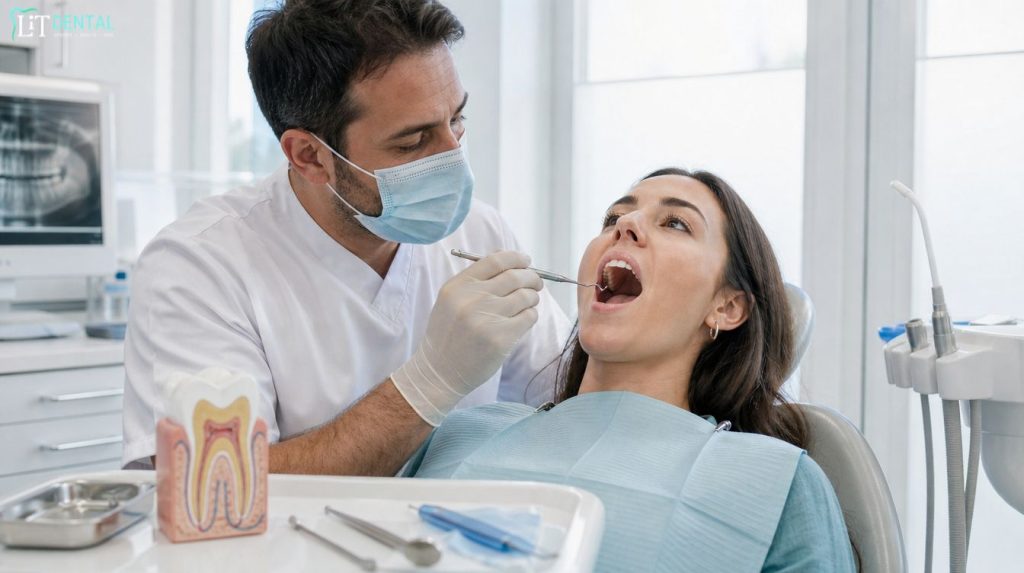
Exposed dentin is identified during a dentist’s visual examination, a mild probing, and, if necessary, a dental X-ray to determine if there is a deeper problem, such as tooth decay. Knowing the exact cause allows for a corrective exposed dentin treatment plan, which may be a simple solution or a more involved one, such as the Dead Tooth Filling treatment. The shape and form of each tooth is unique, and a proper examination is important.
Diagnosing Exposed Dentin
The dentist checks the tooth surface and looks for small cracks. They also notice any signs of wear. Then they may test how the tooth feels with hot or cold items. This can show where the sensitivity comes from and what may have started it.
With the right care, your smile can feel better.
Can exposed dentin heal by itself? In most cases, it does not grow back. Still, a dentist can help by covering the area and reducing pain with a good care plan. Depending on the severity of the problem, a more comprehensive treatment plan tailored to your needs may include consideration of a Dead Tooth Filling. If your smile is looking for an all-round boost to its health and appearance, LiT Dental offers cosmetic treatments like teeth whitening and veneers, as well as restorative care. Any treatment plan should begin with a sound evaluation, as causes of exposed dentin vary from one person to another, as does the severity of the condition.

Conclusion
The first step in knowing how to protect exposed dentin is to see a trusted, licensed dentist who can thoroughly evaluate the tooth and make recommendations for the next steps that are appropriate for you. Depending on the amount of dentin exposed, the team at LiT Dental in McKinney, TX can provide services like tooth filling, crowns, and other supportive services that can help protect a tooth with exposed dentin. Dentin exposure can cause teeth to feel sensitive, and recognizing the signs and symptoms of dentin exposure can help you know when to seek treatment. At LiT Dental in McKinney, TX you can receive fillings, crowns and cosmetic services to help maintain your smile. A dentist can assist you in deciding the best course of action.
