
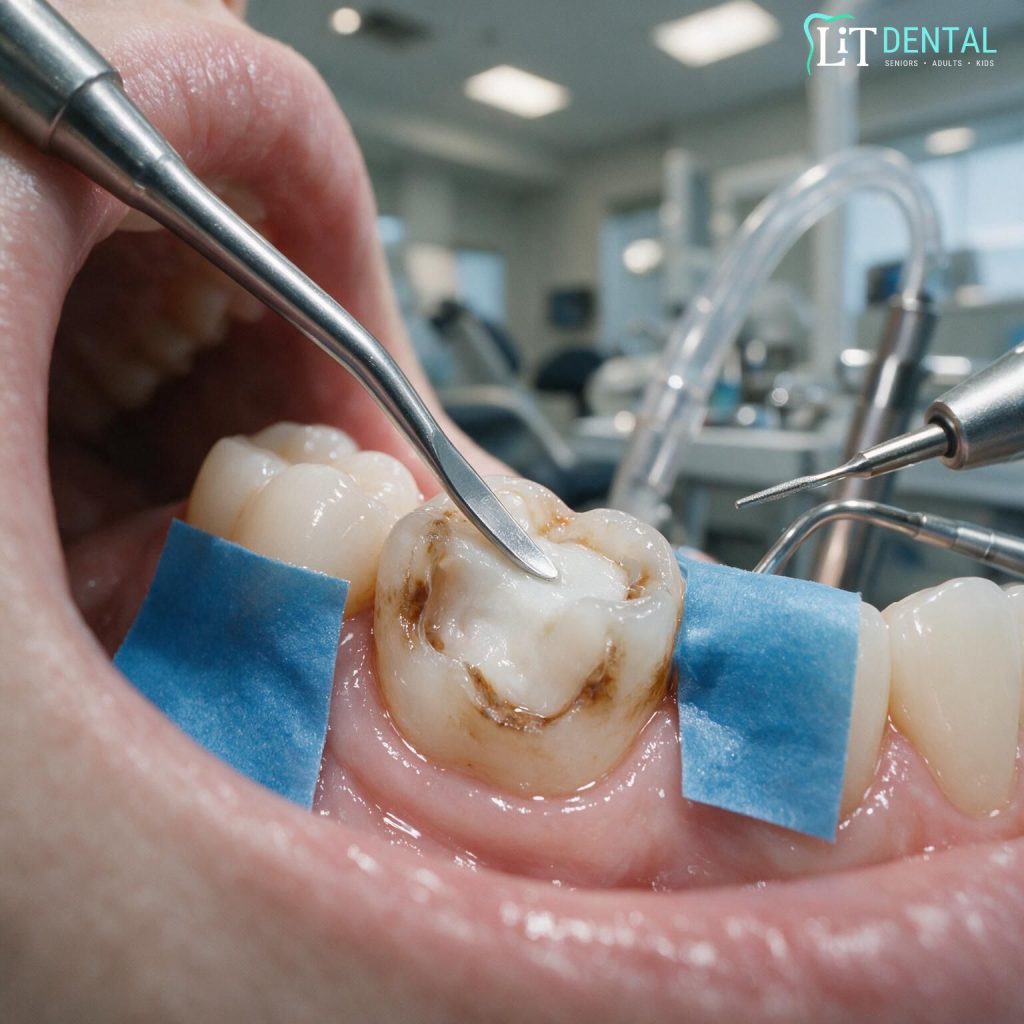
Knowing the reason is to start by understanding what a dead tooth is and what occurs to a tooth when the blood supply to the internal tissues ceases. What does it actually mean to have a “Dead tooth”? And how to know if a filling in a tooth is dead?. It is a tooth that has lost its living inner tissue (pulp), which contains nerves and blood vessels, from either untreated decay or physical trauma. After all the pulp is removed, a tooth is left without its native line of defense and should be treated professionally to keep it from causing additional problems.
What Is a Dead Tooth, and Can It Be Repaired With a Filling?
A dead tooth is a tooth which has suffered total loss of the blood supply to the pulp tissue and is therefore dead. What causes a dead tooth? Deep untreated cavities that penetrate the pulp and blows to the tooth, such as a sports injury or a fall, causing the blood supply to the inner tissue over time.
How to treat dead tooth? Is it possible to fill a dead tooth? A routine filling is not enough to treat a dead tooth. The filling of addresses will expose decay of the teeth but will not treat the decayed internal structure of the tooth. Treatment will vary based on the amount of damage and if the tooth is structurally sound.
When the tooth dies and the pulp is damaged.
Once dead pulp in a tooth, the tooth can no longer resist infection, perceive temperature changes or heal on its own. If the nerve and blood supply to the tooth is absent, the tooth becomes brittle and is very susceptible to bacterial invasion. A clinical examination is needed to confirm filling in tooth is dead, symptoms do not always indicate it.
What are the signs that a tooth may be dead?
Sometimes you don’t have a lot of pain if you have a dying tooth or the symptoms of a dead tooth are not obvious. That’s a red flag, because it may indicate that the nerve has already lost its function overall. The ability to identify a dead tooth by sight and feel enables the issue to be identified early and before it escalates into a bigger problem.
Signs of discoloration, pain, sensitivity and more.
- One of the most obvious signs is tooth discoloration, which occurs as a dead tooth slowly turns yellow, grey, or brown over time as the inside tissues decompose, leaving a very obvious answer to the question of what a dead tooth looks like?.
- If a tooth feels painful or tender to touch and/or pressure, and if the pain is not sharp, is dull or has a constant nature, these symptoms suggest that the pulp is dying and infection is progressing in the root area, causing pressure to build up within the sealant on the tooth.
- Can a dead tooth nerve feel hot and cold? Yes, in the beginning the nerve dies. However, once completely killed, a tooth will not react to the temperature extremes of hot and cold, and this can seem like a good thing, but it’s a sign of greater damage.
- If the gums are swollen or there is a bump near the bottom of the tooth, it means that infection has extended beyond the tooth and must be seen and treated by a dental professional.
Does a Filling Save a Dead Tooth, or Does Root Canal Therapy Save a Tooth?
Treatment of a dead tooth will depend on the amount of structure that has survived and whether there is infection. When the pulp is dead, a filling is almost never a total solution — the underlying problem has to be solved first before a surface solution is in place.
Selecting the best possible treatment for tooth damage.
If the tooth has some of its structure remaining, the most common treatment for the dead pulp is root canal therapy. The dead pulp is taken out, the canals are cleaned and sealed, and a crown is placed on the tooth to protect it from breakage and further damage.
A tooth filling can be used after the root canal treatment to close access holes and/or to treat surface decay that caused the pulp injury, but it’s a secondary treatment after the basic root canal procedure and should not be considered as a universal treatment for a dead tooth.
If the tooth structure is too badly damaged to be restored, it is necessary to extract it, and then put in a dental implant, a bridge, or some other means to maintain the normal function of the bite and prevent the adjacent teeth from moving into the missing space.
How to know if a tooth is dead?
To diagnose a dead tooth, it is not enough to look at it. The aesthetic appearance of a dead tooth is not the only method of clinical testing a dentist has to determine pulp status and level of internal damage prior to recommending treatment.
Dental Exams
Diagnosis involves a visual examination, pulp vitality testing and dental x-rays. Pulp testing involves the use of either temperature or electrical stimulation to determine the response of the nerve. No response means pulp death. The dental professional will use X-rays to determine how much bone loss has occurred and if the bone around the root is infected and the anatomy of the tooth prior to deciding on treatment.
When vitality tests of the tooth are performed, either by applying cold or electrical stimulation to the tooth and the tooth does not respond, this proves that in this particular tooth there is absolutely no vitality in the tooth nerve, and therefore, the filling is for a dead tooth.
The dental X-rays reveal the surrounding area around the root tip to be darkening, which is a radiographic sign of infection or bone loss and signifies that the dead tooth is already starting to compromise the surrounding jaw structure and needs to be seen by a dental professional.
Pressure and percussion (tapping on the tooth) will show if the areas are tender and painful, indicating the presence of infection or dead internal tissue causing an abscess.

Conclusion
If you suspect that you have a dead tooth, LiT Dental will conduct a thorough assessment of the tooth, which may involve a pulp test and a complete examination of the tooth. This assessment will help them determine the best course of action for your tooth and situation. Whatever the solution is, root canal therapy or a restoration or otherwise, LiT Dental provides the very best care to help maintain your natural tooth whenever possible.
