
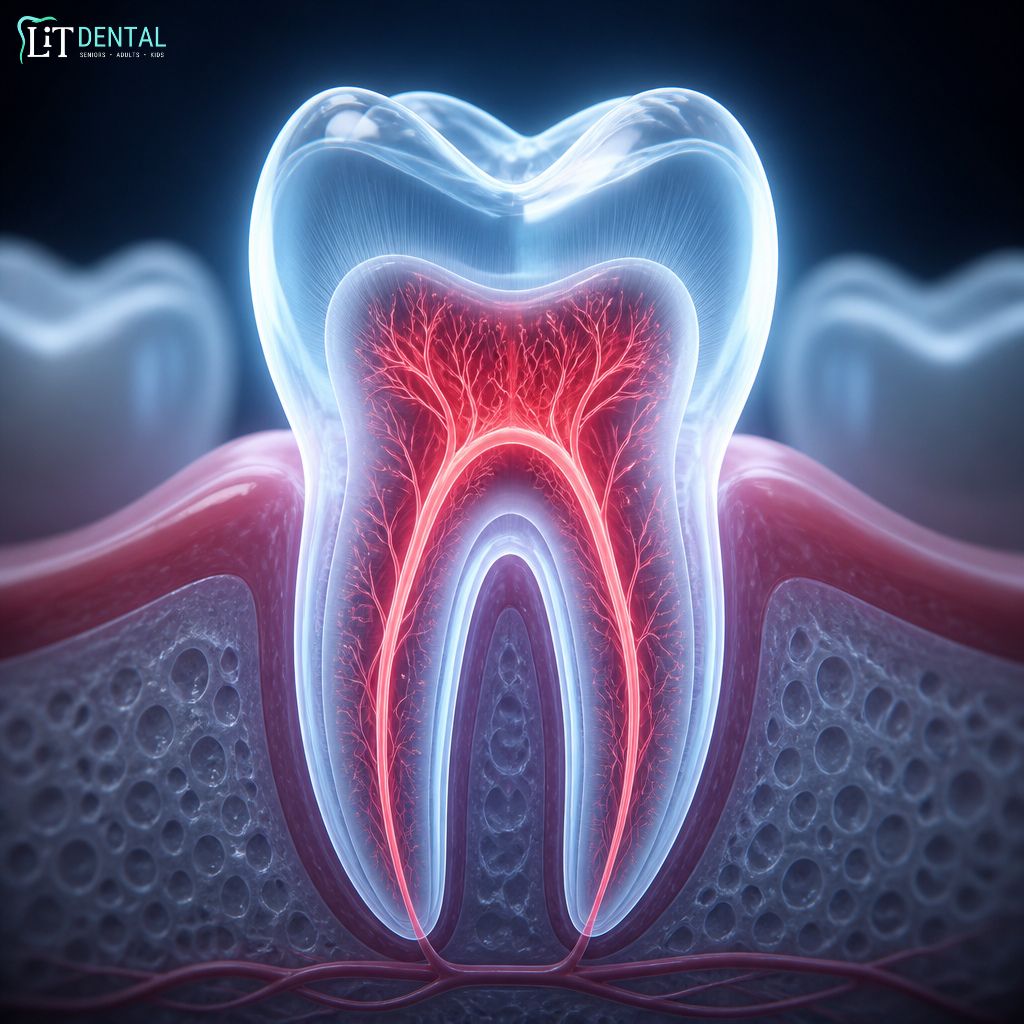

Tooth nerve pain can cause major discomfort when eating, drinking, or even while you’re sleeping. It tends to show up when the soft inner area of the tooth, the pulp, gets irritated, gets inflamed, or basically turns into some kind of infection, you know. Most of the time it starts from cavities, tiny cracks, and sort of localized dental infections, or just plain sensitivity. You might get some easing at home; however, if the pain keeps coming back or lasts too long, it will need a professional dentist involved.
What actually causes tooth nerve pain?
Often it is irritation or some sort of damage to the tooth nerve that sits inside the tooth. When this delicate area gets inflamed from decay , from an injury, or from bacteria, the outcome may be pain that feels sharp or stays around longer than you expect.
Cavities and cracks: infection and tooth sensitivity.
- It can get deep enough to irritate the nerve, leading to cavities.
- Cracks can let bacteria slide into the inner parts of the tooth, like not just the surface but deeper sections.
- Infections in the teeth can be really unpleasant and painful, cause swelling, a cloudy pus kind of stuff, or even that bad taste you can’t shake, no matter how much you rinse.
- Sometimes one tooth feels extra sensitive to hot, cold, sweet or acidic foods and then you get quick pain.
What would it be like if you had a toothache?
The pain might feel sharp, it can pulse and throbbing, or it just kinda stays there and becomes persistent, and honestly it depends on what’s really behind it. A lot of times the way the tooth pain behaves, the whole pattern it keeps doing, can help your dentist sort out what’s going on.
Identifying Sharp, Throbbing and Lingering Tooth Pain
There can be a sudden sharp pain when biting or consuming cold foods. Throbbing pain can be like a steady pulse and may be accompanied by swelling or infection. If pain persists after the hot or cold stimulus, it could mean deeper pulp irritation. A few also report that dental discomfort is more apparent at night, especially when sleeping.
What are some steps you can take at home to ease the tooth nerve pain?
Mild tooth nerve pain can be temporarily managed at home by keeping the area clean, avoiding triggers and using the appropriate pain relief, however, this will not cure the underlying cause. Gently clean the area with warm salt water and brush around that sore tooth. Try to stay away from foods that are too hot or too cold , also sweet, or acidic if those make the symptoms worse. A cold compress on the outside of your cheek can help lower swelling or pain a bit . For over-the-counter pain relievers, use them exactly as the label says , they can be useful. Don’t place aspirin directly on the tooth or gums either, because it might irritate the tissue.
What dental treatments can be used for nerve pain?
If whatever is irritating the nerve gets treated with dental care, it may help ease what you feel. Your dentist may examine the tooth, ask about your symptoms, test for tooth sensitivity , and take an X-ray if it seems needed.
Common options include fillings, root canals, crowns, and other treatments.
Fillings can help prevent further damage to teeth and fix cavities in their early stages. The pulp can be infected or badly inflamed in the root canal and, during the treatment, the inside of the tooth is cleaned out while the natural tooth is saved. A weakened or, on the other hand, overstrengthened tooth can be sheltered with a crown. Your dentist might also suggest help for gum disease, tooth sensitivity, or other dental troubles, depending on what started it in the first place.
When is it time to visit the dentist?
See your dentist if the toothache feels intense, keeps coming back, is constant, or shows up alongside trouble eating or sleeping. If you notice swelling of the face or gums, have fever, see pus, get a bad taste , or you can’t manage to open your mouth properly, seek immediate medical attention. These symptoms can be a sign of infection.
Can you eliminate tooth nerve pain in 3 seconds forever?
There’s no home remedy that can kill tooth nerve pain in three seconds permanently. Quick tricks might take your mind off discomfort but they won’t fix damage, cracks or infection. When the pulp is infected or severely compromised, it is typically necessary to seek dental care to deal with the cause of pain.
What to do to prevent nerve pain in a tooth at night?
How to stop nerve pain in tooth at night? In order to reduce the pain that may occur with the tooth nerve at night, sleep with your head raised above the level of your body, steer clear of foods and beverages that cause symptoms and follow the instructions for taking pain medication. A cold compress will help ease the pain for a short period of time. If this is not the case and recurring or severe nighttime pain is experienced, however, it should not be ignored but should be evaluated by a dentist.

Conclusion
Tooth nerve pain is like a little warning light, meaning something isn’t right, either inside the tooth or around it. Sure, home remedies might help for a short while, but they rarely cure the root cause, because the real fix is to handle what’s causing the issue in the first place. LiT Dental is capable of identify the cause of your pain and offer tailored treatment to maintain your natural teeth, promote comfort, and support healthy gums.
