
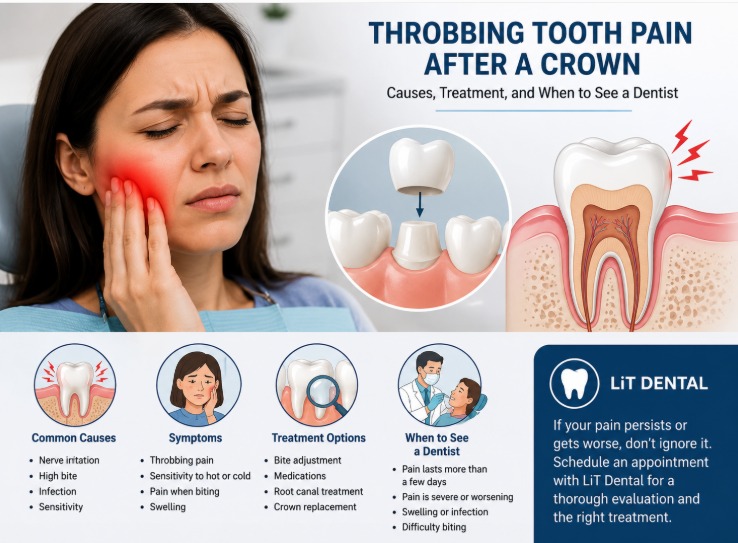
If your tooth starts to hurt right after getting a dental crown, that can be a normal reaction right away, even if it feels a little off. Usually, after a little while, things tend to settle , but if the discomfort keeps growing or the pain starts climbing, you really should have your dentist take a look, just to be safe. A dental crown is often used to reinforce and shield a damaged tooth, and honestly, it can take a bit of time for everything to calm back down after the crown is set in place. Most of the uneasiness tends to calm down within a few days; but if it doesn’t, or you feel a more persistent throbbing, then there may be another problem going on. Let’s go over the most frequently asked questions about tooth pain after crown treatment.
Why does a Dental crown cause your Tooth to ache?
A crowned tooth might tingle due to sensitivity after treatment of the tooth and gums. While performing the procedure, the tooth is being modified in such a way that the crown can be fitted. This may temporarily irritate the nerve within the tooth. There may be mild soreness that will improve over time.
Another common question is: “is a crown painful to get? The area is numbed and most patients experience little or no pain during the procedure. It is normal to feel slight pain afterward, but this typically only lasts for a short time.
Common Causes of Post-Crown Pain
- Irritation of the tooth nerve, temporary.
- Gums have been sensitive following treatment.
- The crown is out of the bite when biting.
- There was already significant damage to the tooth.
- The tooth is temperature sensitive (to hot or cold).
- There is a small adjustment to be made in the bite.
- Healing is still taking place.
Will a Tooth that has been crowned continue to throb after the crown has been placed and how long?
Yes, some people get mild tooth ache after the crown is placed and, well, that is normal. Most times it just hangs around for a couple of days, then it eases up little by little as the tooth settles in. A smaller number may have that kind of sensitivity for one or two weeks, especially when eating something hot or cold.
Still, the discomfort should improve, not grow. If it stays the same or gets worse, or if it’s more intense, or it starts messing with your sleep, then you should check back with your dentist. Don’t just overlook long-lasting pain.
Recovering vs. Problem Signs
- Typical is a few days of mild soreness.
- Symptoms of hot and cold sensitivity can persist for 1-2 weeks.
- The pain should gradually get better every day.
- Severe pain or swelling is not the norm.
- If the pain progressively increases, the problem requires dental attention.
- Any difficulties with bites should be investigated.
How is it that the pain under a crown can last for a long time?
If there is pain after the normal healing time, there may be another dental problem. A frequently asked question is, “why does my crown hurt when I put pressure on it?” This is often due to uneven bite, tooth infection or damage to the nerve within the tooth.
It’s not always the crown. Treatment for the tooth below may require additional work to either eliminate the infection or repair the damage.
Other causes include bite issues, infection, nerve damage, and other causes.
- A crown that is too high
- Infection within the tooth.
- Inflammation or damage of the nerves
- A cracked tooth that is not visible from the outside
- Gum infection around the tooth
- Damaged crowns (loose/damaged)
- Bruxism, undue load on the crown of the tooth.
What can be done to relieve a Throbbing Tooth pain following a crown?
Treatment will depend on the cause of the pain. Usually mild discomfort can improve over time and with basic home care. You might be asked to put off hard food for a few days, and may be prescribed pain medicine by your dentist.
If the pain doesn’t subside, a dental examination will be performed. May adjust the bite if too high. If an infection or nerve problem is discovered, further treatment, such as root canal or crown replacement may be required. The problem can be avoided from getting worse if treated at an early stage.
At Home Relief and Professional Dental Care.
Only take pain medicine the dentist prescribes, don’t chew tough foods on the treated tooth, even a little. Brush and floss gently, don’t rush it. If the pain gets worse, if swelling starts or the bite still feels odd, at LiT Dental we can figure out what’s going on, then provide the right kind of care to save your tooth.

Conclusion
Mild pain after crown treatment is not uncommon, and it may subside in a couple of days. Most patients can also rest assured that the answer to “is getting a crown painful” is typically no, as this process is carried out utilizing a local anesthetic. If you keep asking yourself, “why does my crown hurt when i put pressure on”, at some point then it’s time to get the tooth checked. If the bite, infection, or nerve damage is causing ongoing pain, it may require some treatment . The earlier you’re able to spot the problem, the more easily you are able to keep that smile going without too much trouble. If the crowned tooth is still painful or sensitive, book an appointment at LiT Dental to get a thorough examination and treatment plan.
