
An avulsed tooth is a tooth that has been completely knocked out of its tooth socket because of some sudden injury or accident, such as a fall or sports injury. Avulsion is a true dental emergency and can be a lifesaver if acted upon quickly, calmly, and appropriately, depending on various circumstances, if the tooth can eventually be saved. This blog will describe what happens if you get a tooth knocked out, what you should do immediately after an avulsed tooth, and the possible options your dentist might have for preserving your smile and long-term oral health.
What do you mean by avulsed tooth, and what can cause it?
Tooth avulsed is a tooth that is completely knocked out of its sockets, the roots as well, typically as a result of a sudden impact or accident. Avulsions typically occur when involved in sports, during a fall, as a result of a car accident, or in a physical altercation, particularly if the mouth is struck directly. This is a true dental emergency, as the tooth has not only a crack, but has been completely knocked out. The best overall possible results are obtained when prompt action is taken following the tooth knocked out event.
Fill in gaps in your teeth as well as common dental injuries.
- Injuries caused by sports activities and accidental collisions while exercising.
- Accidental falls (at home, at work, or outdoors playing)
- Car accidents and other direct impacts to the face
- Mouth to mouth fights or physical altercations
What’s the first thing you should do after your tooth is knocked out?
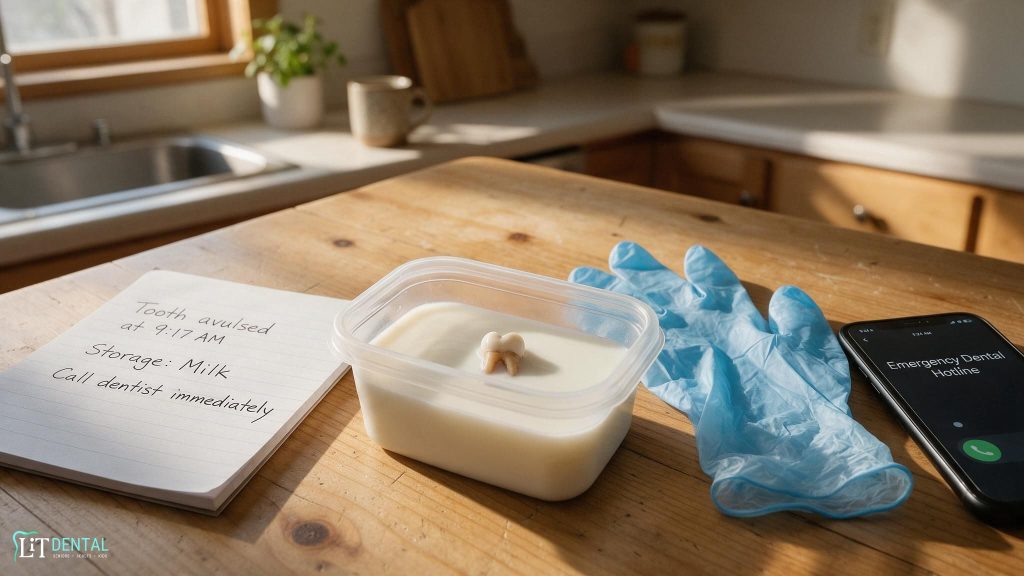
Stay calm and act fast if a tooth has fallen out, to maximize the chances of saving the tooth. Gently rinse the tooth with water if it is dirty, but don’t scrub, pick it up by the crown only, never the root. If there are no foreign substances in the tooth’s socket, attempt to reinsert the tooth back into the socket without applying excessive force. If this isn’t possible, keep it moist in milk or saliva and visit a dentist as soon as possible, preferably within 30 minutes.
First Aid steps which could help to save the tooth:
It is important to handle the tooth gently by the crown, wash it gently without scrubbing, and being careful not to let it dry out, as well as keeping it moist in milk or saliva. The faster the dentist is seen, preferably within half an hour, the greater the chances of success.
Is it possible to save an avulsed permanent tooth?
Are knocked out teeth replaceable? Yes, in many instances, particularly if the tooth is cared for appropriately and a dentist is contacted in a timely fashion. The success will rely significantly on the storage of the tooth, the period of time that has elapsed since the extraction and whether the surface of the root was undisturbed and undamaged. Ongoing development of the roots in children can cause teeth to react differently. Although not all the time reimplantation will work, it significantly increases the chances of success by acting promptly and carefully.
Factors which influence the successful reimplantation of teeth
- Length of delay in seeking professional help
- The degree of care taken in the storage and protection of the tooth.
- The condition of the root surface of the tooth.
- The age of patient and the state of the dental development are important.
How do dentists treat an avulsed tooth?
There are a number of treatment options for an avulsed tooth, depending on the situation, and how the tooth was treated in advance. Reimplantation means gently putting the tooth back in place in the socket, then splinting the tooth to keep it in place until it heals. The nerve tissue may be dead and a root canal treatment is usually required following the treatment to prevent infection of the tooth. If the tooth is not restorable, other restorative treatments may be discussed with your dentist to help maintain your entire smile.
The reimplantation, splinting, root canal treatment, and other options.
- Be sure to reimplant the tooth, placing it in its proper position.
- Splinting to stabilize it during the healing process
- As a nerve protection and infection treatment, it is called root canal treatment.
- Alternatives to the hole if the tooth can’t be saved.
Dentist can guide you about a root canal is necessary after reimplantation, or if it’s the tooth’s nerve that is affected later, Dead Tooth Filling, and what the procedure usually involves. Patients who have suffered a dental injury may also choose to receive crowns, tooth filling, teeth whitening, and veneers from LiT Dental in McKinney, TX, to restore and improve their smile. Licensed dentists carefully review all treatment plans at our practice to maintain a healthy smile for you and your family.

Conclusion
A tooth avulsion is a serious dental emergency, but it can be treated with speed and skill to give a good prognosis. If it does occur, it’s good to know the first-aid procedures and understand the available treatment options. At LiT Dental in McKinney, TX, we can help with your smile and can provide you with the professional guidance and cosmetic and restorative services you need.
