
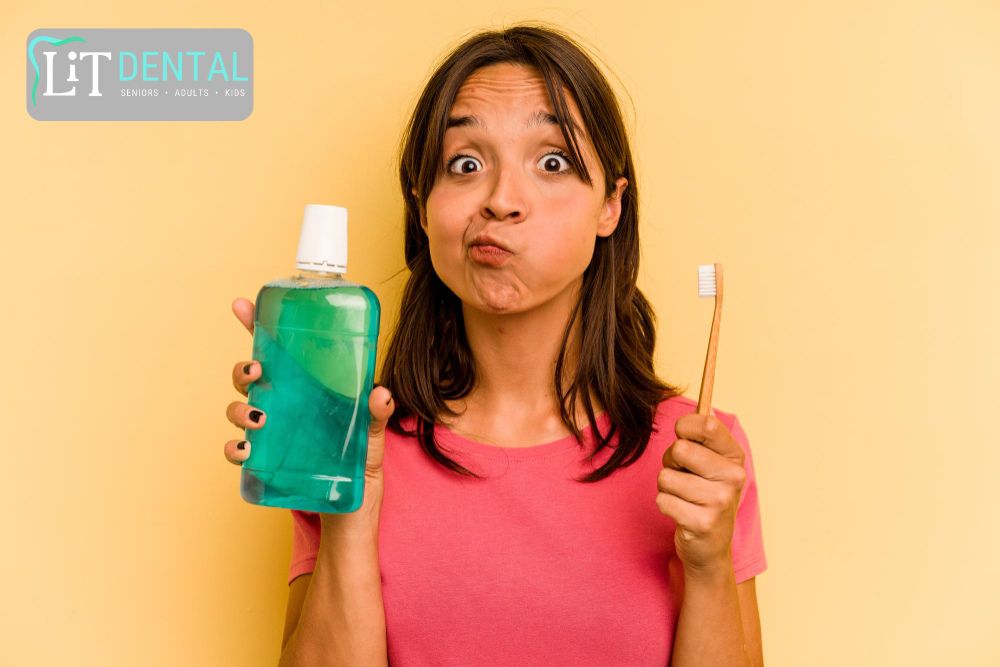
The gums are like the base holding the teeth. Possibly, you have gum disease when they grow inflamed, puffy, or even bleed during the brushing. The question that is posed by many individuals is whether the use of the appropriate mouthwash can assist in the treatment of this widespread condition. Although the use of mouthwash is a significant supportive role in the health of your gums, it is good to know what makes an effective formula to make a good choice. The most effective mouthwash used in bad breath will usually also address the bacteria that cause gum inflammation. We will dive into what the best ingredients are, and how professional dental care is still needed so that one can treat gum disease.
Which is the most effective mouthwash to use in gum disease?
An effective mouthwash against gum disease has antibacterial properties that decreases plaque causing bacterial populations but at the same time is not harsh but can be used daily. Stronger chlorhexidine mouthwashes are effective in the treatment of gum disease but should be used under the guidance of dentists. Cetylpyridinium chloride (CPC) or essential oil over-the-counter versions also demonstrate clinical efficacy. The question that is posed by many patients is; can gum disease be cured? The solution is that at the initial stages of the disease (gingivitis), most cases can be reversed with adequate care such as therapeutic mouthwash, the best toothpaste against gum disease, and professional cleanings. But, the mouthwash cannot cure the gum disease though it should be a part of overall oral care that is also provided by a professional in the facility such as LiT Dental in McKinney, TX.
What are the clinically tested formulas that can help decrease plaque and gingivitis?
It has been demonstrated in clinical research that chlorhexidine, essential oil (such as thymol, eucalyptol and menthol) or cetylpyridinium chloride containing mouthwashes can eliminate plaque and gingivitis when used as instructed. Chlorhexidine is regarded as the gold standard of treating gum disease but it usually needs the prescription of the dentist. There are over-the-counter essential oils formulas, which have significant effects on mild to moderate inflammation of the gums. Consistency is the key as well as using it with the best toothpaste against gum disease and flossing.
What is the use of mouthwash in the treatment of gum disease?
Mouthwash assists in treating gum disease, it goes into places that it cannot reach with your toothbrush as well as on areas of bacteria that lead to inflammation. During the process of rinsing with therapeutic mouthwash, antibacterial elements kill harmful bacteria in between the teeth, along the line of the gum, and on your tongue. This decreases the number of bacteria which leads to accumulation of plaque and inflammation of the gums. An excellent bad breath mouthwash is often effective on gums as well as the two are caused by bacteria. Nevertheless, to answer the question, is gum disease curable it is necessary to realize that mouthwash is complementary and not a substitute of professional treatment. Dentists in LiT Dental can evaluate your gum conditions and prescribe the use of therapeutic mouthwash or not.
The mechanism of action of antibacterial elements in plaque.
The ingredients used in antibacterial mouthwash have various mechanisms of aggression against gum disease. Chlorhexidine is attached to the tooth surface and gradually released over time, hence rendering lasting bacterial inhibition. Essential oils interfere with the bacterial cell walls and destroy the organisms that lead to plaque development and inflammation. Cetylpyridinium chloride (CPC) inhibits the adherence of bacteria to teeth and gums. These materials lower the level of bacteria that causes toxins that irritate your gum tissues. Therapeutic mouthwash, together with the best toothpaste to treat gum disease that has fluoride and antibacterial agents, will result in a system protection against gum inflammation.
What should a mouthwash containing gum-disease include as ingredients?
Individuals and dentists recommend effective gum-disease mouthwashes that include one or more of the following clinically proven ingredients:
- Chlorhexidine gluconate (0.12 prescription concentration) to have potent antibacterial effect.
- Cetylpyridinium chloride (CPC) to reduce plaque and avoid bacteria adhesion.
- Essential oils (thymol, eucalyptol, menthol, methyl salicylate) which interfere with the bacteria cells.
- Fluoride in order to strengthen tooth enamel and prevent tooth decay in combination with gum treatment.
- Hydrogen peroxide to act as an oxygenating agent that destroys anaerobic bacteria.
- Zinc products that counter sulfur products that include bad breath and inflammation.
In choosing mouthwash, find the products, which were approved by the American Dental Association (ADA), which means that their clinical effectiveness was evaluated. Is gum disease curable is the question of many, and the answer to this question partially is yes, as long as one uses proven ingredients on a regular basis. Mouthwash which is the best to eliminate bad breath usually is loaded with antibacterial properties and helps in gum health, which gives two advantages of one product.
Do alcohol-free mouthwashes help in better treatment of gum disease?
Mouthwashes which are alcohol-free may be as effective as the alcohol-based formula in the treatment of gum disease and are not so irritating. The alcohol contained in conventional mouthwashes is used as a carrier to have active ingredients and some antibacterial effect, though it may leave your mouth dry and sensitive gumatic lining irritated. There are numerous contemporary alcohol-free formulation that provide the same level of therapeutic value without causing the burning sensation or the drying effect. Alcohol-free varieties tend to be more comfortable to those who already have inflamed gums. A mix of the most effective toothpaste against gum disease and alcohol-free mouthwash is a comfortable yet efficient routine. Being aware of the question of whether or not gum disease is curable requires realizing that success in any form of treatment relies on consistency- should alcohol-based mouthwash make a person unwilling to use it on a daily basis because of the unpleasant feeling it causes, alcohol-free ones are more appropriate in ensuring compliance.
Effectiveness and risk of irritation compared.
The studies indicate that alcohol-free therapeutic mouthwashes containing either CPC or essential oils are equally effective compared to alcohol based ones in reducing plaque and gingivitis. The primary distinction is comfort, alcohol-free formulas result in fewer burns and do not dry the oral tissues. Drinks without alcohol are more effective in adherence to treatment in individuals with sensitive mouths, dry mouth, or severe gum inflammation. Nonetheless, there are alcohol-based formulas which have slightly lower kill times on some bacteria. The most appropriate decision will be again, as far as your personal sensitivity and which formula you will consistently apply on a daily basis as a part of overall gum disease treatment.

Conclusion
To effectively manage gum disease, it is not just a matter of selecting the best mouthwash that will combat bad breath or gum swell, it requires professional care of the teeth and the home hygiene. Although therapeutic mouthwashes are considered an essential supply side, they are not capable of the professional cleanings, scaling and periodontal care that would actually be required to treat gum disease. LiT Dental is a dental facility based in McKinney, TX that is specialized in the field of gum disease diagnosis and treatment.

