
Many people don’t realize that it’s more common to lose a tooth or several than it is to keep them. Today, dental implants are among the most dependable and durable methods of regaining your smile. However, implants are not all created equal and selecting a specific implant for your oral health depends on the type of oral health you have. The first thing you need to understand is the advantages of dental implants and what dental implants you can get that will suit your requirements.
What are the major types of dental implants that are available?
There are different types of dental implants, each of which is suitable for a different situation. The specific type will depend on the amount of bone remaining, the number of teeth requiring replacement and the overall health of your mouth. The first step in knowing the advantages of dental implants is knowing if one is applicable to your situation. That’s the job of a licensed dental professional, but it’s important to be prepared for the appointment by knowing the basics.
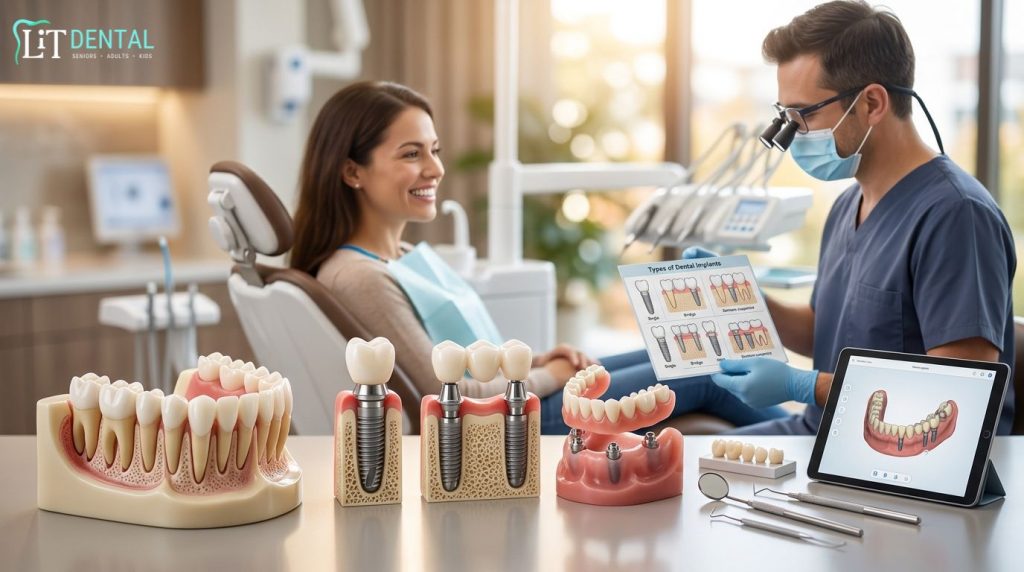
There are three different types of endosseous implants: endosteal, subperiosteal, and others.
- Endosseous, which are the most common type, are the implants. They are mini titanium posts that are inserted directly into the bone of the jaw. A crown is put on top of the bone once it heals around the post.
- Subperiosteal implants are situated beneath the gum and above the jawbone and do not go into the jawbone.
- Mini dental implants are smaller than the regular dental implants. They are less intrusive, recover quicker and can even be one of the cheaper dental implant procedures.
- All-on-4 implants use just four strategically placed implants to support a full arch of teeth. It is a proven procedure for those who require complete mouth restoration.
What is the difference between Single Tooth Dental Implants and Full-Mouth Dental Implants?
The difference is in the number of teeth to be replaced and the structure required to support them. Either option provides the essential functions of the dental implant (stability, appearance, and function) in the long term, however, treatment plan, treatment time, and investment are very different.
- Single-tooth implant will be a single tooth replaced by one implant post and one crown. It is a simple and enclosed treatment that is performed by patients who have good teeth in general.
- Full mouth implant solutions like All-on-4 or implant supported dentures are intended for those suffering from the loss of most or all their teeth, who require a full mouth restoration.
One of the foremost and most crucial considerations your dentist has when faced with the question of selecting dental implants is the number of teeth that are missing. There are manageable dental implant options in both categories and a consultation will help you determine which is clinically and financially appropriate given your situation.
Which type of dental implant is best for patients with low bone density?
One of the most popular excuses people use for not getting implants is the low bone density, but it’s not always true. Of course, there are solutions that cater to this scenario, as well as understanding them, which is part of knowing how to pick a dental implant that is going to work for your anatomy.
Bone Support and Alternative Implant Solutions
- Subperiosteal implants are a direct fix for low bone density. They do not need to go deeper into the bone than endosteal implants, since they are placed on top of the jawbone.
- A technique that restores bone volume before insertion of conventional endosteal implants is referred to as bone grafting. It extends the treatment time, but provides a larger selection of implants for those desiring the most long-term durable result.
- Although mini implants are less expensive than full-sized implants, they still require less bone than the full sized ones, and are one of the less invasive options for patients with bone loss who are looking for a less invasive route forward.
How to Choose the Best Dental Implant for Your Case?
This is the most crucial question and the truthful answer is no one right answer. The advantages of dental implants have been documented for every type of implant, but it is a blend of clinical, practical, and individual variables that will determine which implant is best for you. The first step to making a confident decision on dental implants is to know what those factors are.
oral health, budget, and treatment goals
- The point of departure is current oral health. Gum disease or bone loss or untreated decay should be treated first before implants are placed. A thorough dental examination will help determine if there are any dental issues that should be addressed first.
- The implant types which are structurally feasible without further interventions are directly linked to the bone density and bone volume. This is evaluated during your dental exam by imaging.
- Cost and low-cost dental implant alternatives are a genuine and important part of the decision-making process. The dental field offers multiple types of implants, including mini implants and denture implants, as suitable alternatives that maintain functionality and appearance. Patients concerned about affordability can also explore options such as free government grants for dental implants to help reduce treatment expenses.
The treatment plan for your dental needs will be determined by your long-term smile goals whether you need to replace one tooth or require complete mouth reconstruction. When professional, clear information is needed, LiT Dental is there to help you. We provide comprehensive implant consultations and a complete suite of restorative treatments such as crowns, dental bonding, veneers, and fillings to complement all your smile restoration needs.

Conclusion
Dental implants do not come with a universal size and that’s not bad. That indicates that you’re almost certain to discover an option that will satisfy your situation, your bone structure, and also your budget. The advantages of dental implants are very real and lasting, but first a professional and honest assessment. LiT Dental offers a patient-focused consultation process that takes into account your oral health, goals, and affordable dental implant options. Call LiT Dental today to get started.
