
Full mouth dental implants are one of the most effective solutions for people who have lost most or all of their teeth. Full mouth dental implants are placed in the jawbone and replace the root and visible tooth, thereby providing a natural appearance, function, and feel. Many patients also search for financial assistance options and wonder whether there are programs or grants available to help cover treatment costs.
What are full mouth dental implants, and how do they work?
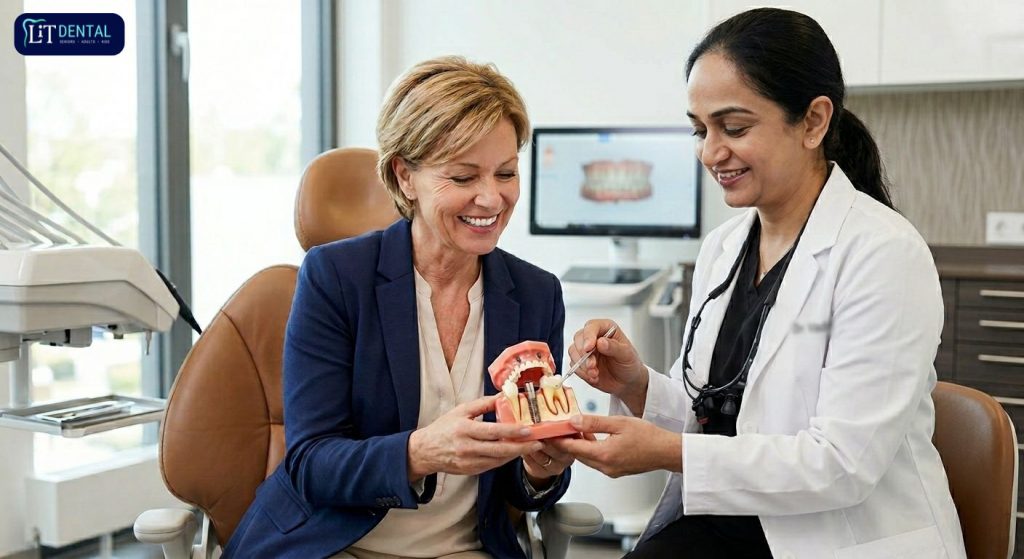
Full mouth dental implants (full mouth teeth replacement) is a procedure where multiple dental implants are screwed into the upper and lower jawbone at the same time. These posts are like tooth roots that fuse into the bone over time (osseointegration). This will be followed by the attachment of a custom-made crown, bridge or full arch prosthesis, which will provide a complete, stable set of teeth that won’t move, slip or need to be removed.
What Is the Cost of Complete Tooth Replacement?
The price of full-mouth dental implants is a significant investment – and knowing exactly what each is is essential for planning accordingly. The average price of a single dental implant is $3,000 – $4,500. The total cost of a full mouth teeth replacement is typically $60,000 to $90,000 for the full replacement, which depends on the number of implants to be placed, the implant material, and the complexity of your case.
How Long Does it Take to Get A Full Mouth Dental Implant?
The entire mouth dental implant treatment is performed in various phases throughout a few months. Being aware of each step will prepare the patients’ mind and body to what needs to happen since the initial consultation to the completion of the final restoration.
Step-by-Step Treatment Process
- Initial consultation and imaging: Your dentist will perform a thorough oral examination and take a number of 3D X-rays and CT scans to measure the density of your jawbone, the health of your gums and overall suitability for getting implants.
- Treatment planning: Planning of the treatment will be done according to the patient’s needs, including deciding the number of implants to be used, the kind of materials to be used, and whether any preparatory work is needed.
- If the jawbone is not dense enough, a bone graft may be performed to provide the needed density for the placement of the implants; this adds healing time but provides more stability.
- The placement of implants: A surgery is performed using local anesthesia or sedatives where the titanium posts are placed into the jawbone. This is the initial stage of the entire full mouth teeth replacement procedure.
- The time of the osseointegration healing period in which the implant post integrates with the jawbone over the next 3-6 months, which will ultimately decide the long-term stability of the entire restoration.
- Once osseointegration has been proven, small pieces of material called abutments are bonded to the posts to hold the final restorations.
- Final crown or prosthesis placement: A custom-made crown or bridge or full arch prosthesis is placed the final step in the dental implant journey to a natural looking and fully functional result.
What are the advantages of opting for Full Mouth Dental Implants?
When compared to other all teeth loss solutions, are full mouth dental implants worth it? The advantages in terms of function, aesthetics and long term health make for very good arguments for many being best suited.
Long term function and aesthetic benefits.
| Feature | Full Mouth Implants | Dentures | Fixed Bridges |
| Bone preservation | Yes
prevents bone loss |
No
bone loss continues |
Partial
limited preservation |
| Stability | Fully fixed, no movement | Can slip or shift | Fixed but relies on adjacent teeth |
| Appearance | Natural tooth look | Can appear artificial | Natural but limited scope |
| Maintenance | Brush and floss normally | Requires removal and soaking | Standard oral hygiene |
| Lifespan | 20+ years with proper care | 5 to 10 years typically | 10 to 15 years typically |
| Diet restrictions | None
eat normally |
Significant restrictions | Moderate restrictions |
| How long do full mouth dental implants last | Potentially lifetime | Requires replacement | Requires replacement |
What to expect post full mouth dental implants?
Full mouth dental implant surgery is a procedure that can be recovered from by most patients if they follow the instructions given following surgery. Knowing what to anticipate allows you to make the proper plan for your home, diet, and schedule leading up to the procedure.
After the procedure care and treatment.
- Swelling, some bruising and discomfort will occur for the first 3-5 days after the placement of the implant surgery treatable with prescribed or over the counter pain relief as directed by your dental provider.
- Eat soft foods, such as yogurt, mashed fruits and vegetables, soup and smoothies, in the first few weeks after surgery to prevent putting pressure on the healing implant site in the beginning.
- Do not drink alcohol or smoke at all during the healing process – smoking increases risks of implant failure in otherwise healthy patients and is one of the top reasons for implant failure.
- Gently clean the mouth around surgical sites with a soft bristle toothbrush and prescribed antimicrobial rinse, without disturbing the healing tissues.
- Go to all follow-up visits to ensure that integration is going well, to resolve any problems that may arise early on and to confirm the timeframe for completion of the next stage of treatment.
- The final restoration is placed and function is restored after 3-6 months, at which point full osseointegration and complete healing has occurred.

Conclusion
A full mouth replacement with dental implants is a life-altering choice and it requires a dental team with experience, technology, and a personalized approach to provide you with the best results for your unique case.
As one of the leading dental practices in the area, LiT Dental provides you with a wide range of dental implant services, along with a team that is dedicated to ensuring your long-term oral health. Contact LiT Dental today and get the first step on the path to a full, complete confident smile that will last a lifetime.
FAQs
How much is a full set of implants teeth?
The total cost of a full set of dental implants is $60,000 to $90,000 for both the top and bottom arches which is based on the number of implants to be placed the materials used and each person’s specific clinical needs that are determined during their consultation.
Is the cost of dental implants cheaper than other options?
The initial investment in dental implants costs more than dentures or bridges yet their extended lifespan and decreased maintenance costs will provide savings to most patients throughout a 20-year period.
Does Dental Insurance Cover Dental Implants?
Some dental insurance plans provide coverage for implant procedures; however, they only cover certain aspects of the procedure, which include crown and consultation costs, instead of covering the complete implant process. Your insurance company should be checked to determine which items your insurance plan will cover.
Do dental implants hurt?
Most patients experience less pain after the procedure, which they can control with normal pain relief, because the surgical procedure uses local anesthetic or sedation to reduce discomfort during implant placement.
