
You are considering getting a dental implant, and your dentist recommended that you need a bone graft? Don’t worry. This is a very typical step. A dental implant requires more than just strong bone, it requires good bone health as well, just like a fence post requires firm ground. If the bone is too thin or too soft, a graft may be used to help restore them. A bone graft is a procedure that is performed routinely by dentists, oral surgeons and periodontists, and well planned from start to finish. We are dental practitioners and want to put the bone graft procedure in terms that you can understand. Below we will discuss what a bone graft is, who needs one, the materials used, the procedure of the surgery and how it feels and how long it takes to heal.
What is a Dental Bone graft, and why is it needed before an Implant?
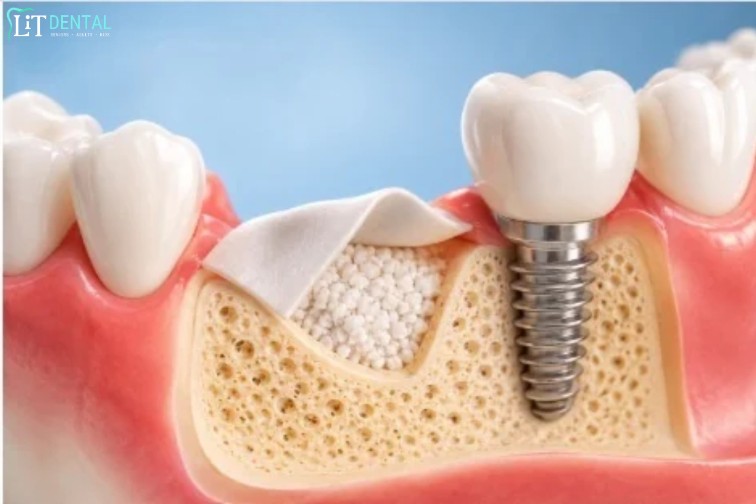
Dental bone graft is a procedure of oral surgery which involves placing bone or bone-like material in the area of the jaw where the bone has been lost or thinned. So, how does a dental bone graft work? The graft is used as a “scaffold”. It keeps the area open and allows new bone to slowly form in and around it. Dentists are concerned about this in dental implant treatment because an implant must have adequate bone tissue surrounding it to remain stable. For individuals who do not have enough bone, a graft can be used to make implants a possibility.
Understanding Jawbone Loss
There are a number of reasons for a decrease in jawbone size or loss of strength. These are typically due to tooth loss, gum disease, infection or mouth injury. Bone loss is significant because it can have an impact on your entire mouth over time. It can cause loose teeth, tooth movement and malocclusion. Many people are not aware of bone loss as it can occur gradually and silently over time. That is one of the reasons why your dentist will rely on X-rays or 3D scans to assess your bone prior to a treatment plan for an implant.
Who needs a bone graft before getting a Dental Implant?
You may need a bone graft if your jaw does not have enough bone density for dental implants. Your dentist will determine the depth and width of your bone at the site of the planned implant. Grafts are also employed to replace a missing tooth following extraction of the tooth, to expand the narrow ridge of the jaw, or to lift the sinus floor prior to implanting in the upper back jaw. A graft is not always necessary. Well, it depends on your scans and your overall health.
Factors Affecting Implant Eligibility
- Duration of tooth loss: The longer a tooth has been missing, the more likely the bone in the area has receded.
- Gum disease: Any history or current gum disease can lead to a decrease in teeth-supporting bone.
- Some implants in the upper back teeth may need a sinus lift.
- Smoking: Smoking can decrease the amount of blood that flows to the gums and smoking has been associated with increased risk of graft failure.
- Diet and other medical issues: Diabetes and other medications may prolong healing, so advise your dentist about your medical history.
What materials are used in Dental Bone Grafting?
There are four sources of bone graft materials: your own body, a human donor, an animal and a laboratory. They all serve as a mould which your natural bone will eventually fill with over time. All of the four options are acceptable and there is no one material that suits everyone. This depends on the size and location of the bony defect, your health, and your dentist’s clinical judgment.
Types of Bone Graft Materials
- Autograft: bone from another part of your body, such as your jaw or chin.
- Allograft: Human bone from a licensed tissue bank, thoroughly screened and processed. Eliminates the need for a second surgical opening.
- Xenograft: Bone from an animal (typically cow or pig) treated and sterilized for use in medicine.
- Alloplast: A synthetic bone substitute, like hydroxyapatite, a natural mineral in bone.
- Healing additives: Some offer platelet-rich plasma, which is derived from a small amount of your blood, to help heal.
How is a Bone graft Procedure performed before Dental Implant Placement?
Typically, bone grafting is performed in a dentist’s office. The exact procedure will vary depending on the location of the graft and the amount of bone required. In some cases, the graft is placed several months before the implant, while in other cases, grafting may be performed at the same time as implant placement. If only a short graft is required, it can be performed at the time of the implant. This is decided by your dentist, depending on your particular situation.
Steps Involved in Surgery
- A local anesthetic is used to numb the gums.
- A small incision is made in the gums, and the gums are carefully pushed away from the bone.
- Cleaning and disinfecting the area.
- Grafting material is grafted into the area where bone is lacking.
- The graft is wrapped in a protective membrane. Some membranes melt off naturally, and others are stripped off afterward.
- The gums are placed back and closed with stitches.
Is Dental Bone grafting painful and what are the options for anesthesia?
The area is completely numbed before the procedure, so most people do not feel sharp pain, but rather feel pressure. Smaller grafts are commonly considered to be a minor procedure and most patients experience only minimal discomfort following surgery. Recoveries may be longer and there may be a second surgical site in grafts using bone from another part of the body. Other options include general anesthesia in some places, oral or IV sedation to help relax you, and other local anesthetic options. Talk to your dentist about which would be best for you.
Managing Discomfort During Treatment
It is normal to experience tenderness, swelling and bruising after a bone graft and will gradually get better in 1-2 weeks. Self-administered pain medications usually help and your doctor may prescribe antibiotics to reduce the risk of infection. In order to maintain a comfortable atmosphere in the home:
- Apply ice packs to the outer jaw, keep head elevated and eat soft foods for several days.
- Do not smoke, vape, spit, drink alcohol or exercise heavily for as long as your provider recommends.
- Slightly sand-like graft particles can be observed in the mouth for the first few days which is normal. If you see a significant quantity, let your provider know.
What is the recovery time for a Dental Bone Graft?
The healing process is in two phases. Firstly, the gums close over the graft, typically in one to two weeks. Then, the bone slowly grows and matures underneath. Healing time varies depending on the type and extent of the graft and the individual patient. Your dentist will do X-rays or a 3D scan to ensure adequate new bone growth before the procedure.
Bone Regeneration Timeline
The healing time will vary with the type of graft. Usually, a socket preservation graft heals within three to four months following the tooth extraction. Sinus lift grafts are typically longer, requiring four to nine months (and sometimes longer in more complicated sinus lift cases) to heal. Healing time also plays a part in the timing. The implant is typically placed within a few months of the graft healing, as unused graft bone may shrink over time.
Are dental bone grafts successful? The outcomes of studies are generally good, though they differ based on the type of graft, site of the graft, and patients’ health.If a fever over 101°F develops or increases, swelling worsens, pus forms or pain increases after the first week, call your provider.

Conclusion
Although it might seem like a large procedure, a bone graft is a well-researched and widely performed technique to create a more robust foundation for a dental implant. Some time is needed to heal and the outcome is dependent on your health, the type of graft and aftercare. Get professional help to find out if a graft is right for you. Our team at LiT Dental can inspect your jaw, provide you with clear information about your options, and help you plan what you’re going to do next with confidence, in McKinney, TX. You can also get crowns, tooth filling, teeth whitening, veneers and other cosmetic and pediatric dentistry services for your entire family. To schedule your visit, please call LiT Dental today!
