
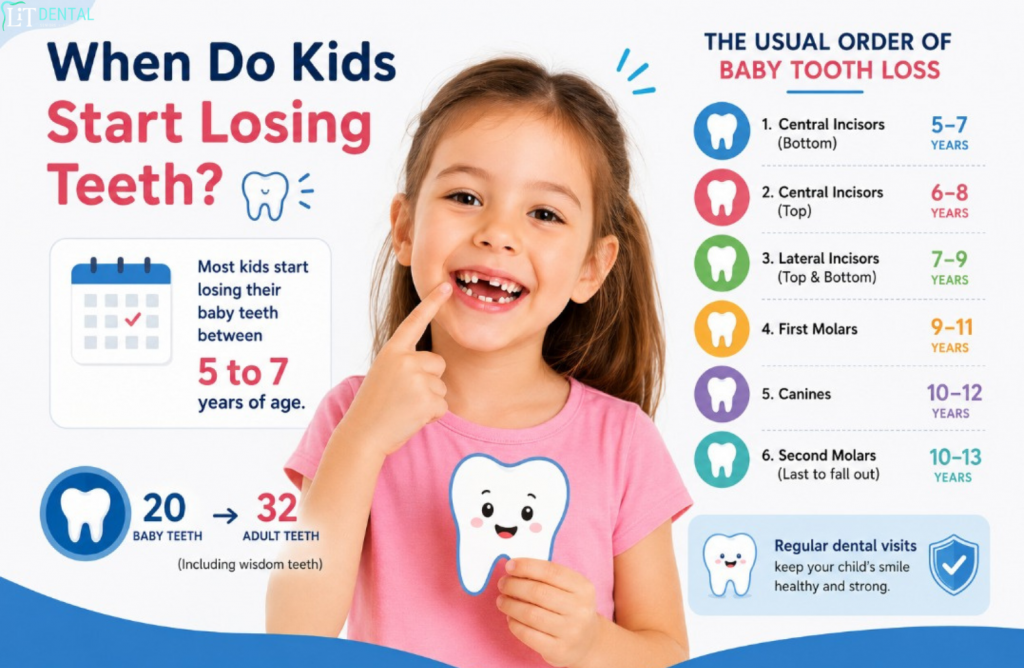
Most kids begin to shed their baby teeth between 5 to 7 years of age and if you’re a parent, you can agree that the moment you see your child’s first wobbly tooth is quite nerve-racking and exciting. With a little bit of knowledge, you will know what to expect, when to expect it, and what is considered to be a normal part of this milestone. This blog answers all the questions parents may have regarding when and in which order the baby teeth fall out and how they can help at home.
When do children typically Lose their Baby Teeth?
The first milk tooth usually comes out when most children are between the ages of 5 and 7. On most occasions, it may have come out a little early or a little late. Total number of baby teeth lost. It takes several years until children have lost all of their primary teeth, usually until around age 12-13 when the wisdom teeth (molars) fall out. It’s not unusual for girls to begin and end the process earlier than boys.
Regular Sequence of Tooth Loss
The age of baby tooth loss varies from 5-7 years old to 12-13 years old. This occurs over a number of years, and as permanent teeth develop underneath the gum line, the baby teeth are pushed out from underneath. When do baby teeth fall out? The age at which children lose their first tooth can range and is typically within 1 year of the age at which it is expected.
What are the most common First Teeth to fall out?
When do kids lose their first tooth? Kids lose their molars in the back of their mouth first, and then their incisors in the front. The order of the teeth tends to be the same as the infants’ order of arrival from front to rear over the years that follow.
The Usual Order of Baby Tooth Loss
- The most common teeth to fall out are the two front bottom teeth (central incisors), usually at between about 5-7 years old, and can often lead to that classic gap-toothed smile in all those childhood photographs.
- The top central incisors, or two front upper teeth, follow, and it is normal for them to loosen and drop in a few months of the bottom incisors’ departure, during this same window of development.
- Lateral incisors (on both top and bottom) follow, then the first molars, canines, and lastly the second molars (these are typically the last permanent milk tooth to fall out, around age 10-13).
- How many teeth do kids have? Children will have 20 baby teeth, which will be replaced by 32 permanent adult teeth, including the wisdom teeth that come in later in adolescence.
What are the indicators that a child is ready to lose a Baby Tooth?
The symptoms are typically very obvious and by recognizing them, you’ll catch them quickly. The time kids lose their first tooth is often clear before it’s lost because the body provides clear indications that a tooth is heading out.
- Here are some of the most frequently asked questions about loose teeth, adult teeth and other common signs.
- The first sign is when a baby tooth begins to wobble under gentle pressure when the tongue or fingers press against it, which means the permanent tooth is moving toward the surface.
- The permanent tooth growing behind the baby tooth also known as ‘shark teeth’ is an entirely typical occurrence and typically will fall out naturally when the baby tooth loosens.
- It is normal to see slight pinkness or mild tenderness around the base of a loose tooth as the movement takes place beneath the surface as the root dissolves.
- If a baby tooth is lost and there is a gap to be seen, that is a healthy normal development just like parents, the little ones will have to go through the process twenty times.
What to do if the Baby Tooth is loose?
The bottom line is to go with it. It is fine to have a child gently wiggle the tooth with clean fingers, but forcing a tooth that is not ready can be painful or damage gum tissue around the area of the tooth.
How to cope with a wobbly tooth?
Have the child wiggle the tooth on his/her own with clean hands until it comes out. Don’t force or pull a tooth that has a good resistance. If a child suffers an injury and the baby tooth doesn’t come out when it should, or if a permanent tooth hasn’t erupted after a few months, a dental appointment should be scheduled for the child.
To keep track of the eruption of permanent teeth, ensure that baby teeth are coming in on time and fix spacing and alignment issues early on in the tooth loss years, LiT Dental recommends regular dental visits during this time. If you have questions regarding the timeline of your child’s tooth loss, or if you observe something that doesn’t sound like the norm, LiT Dental is ready to help guide you and your child through the process, step-by-step with its pediatric dentistry services that include Children’s Dental Services, Fluoride treatment and Dental sealants for kids.

Conclusion
One of the most common aspects of childhood is losing baby teeth and it’s a lot easier for both kids and parents to handle when they know when and in what order it happens and the signs to watch for. One thing that every parent will ask is, when do baby teeth fall out and the answer is quite simple for most of the time. Here at LiT Dental we are here with our pediatric care to help keep your child’s smile bright from their very first wiggly tooth to the big day of their adult teeth.
