
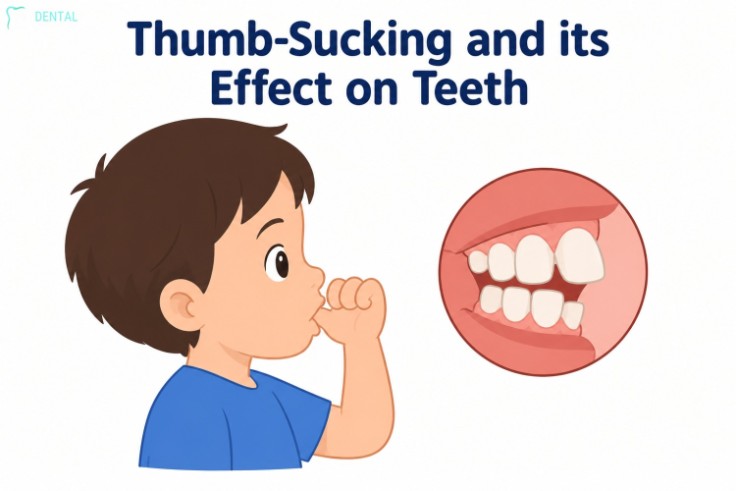

It is normal for babies and young children to suck on their thumbs. It aids their sense of security and tranquility. However, children’s mouths grow as they grow. The teeth come into position, the jaw enlarges, and the palate forms. If this habit persists over extended periods of time, it can alter the growth of all of this. Fortunately, the majority of children will just outgrow this on their own and there are some simple steps that parents can take. Because it’s one of the most frequent habits we see, thumb sucking frequently appears when families learn about Common Dental Issues in Kids and How to Prevent Them . We see children again and again, and we want to give you the facts about dental health – not the scary ones. In this blog, we clarify what changes occur with thumb sucking teeth, why children begin sucking their thumbs, when it’s a concern, and why some children are more affected than others. Let’s learn together!
How does Thumb sucking affect a Child’s Teeth and oral development?
Sucking with the thumb can alter the growth of teeth and jaw. A child sucking hard and frequently presses the front teeth and roof of the mouth with the thumb. This pressure may cause the upper front teeth to move forward, and the lower back teeth to move backward. May cause an open bite, where the child’s front teeth do not touch during biting. It may also cause the palate of the mouth to be low and narrow. The smile, appearance, speech (lisp) and chewing may change. That’s the reason for the importance of early dental checks.
What is the reason for children to suck their Thumbs and when does this habit typically start?
Children suck their thumbs as it is calming. It’s a reflex from birth. A lot of babies suck their thumbs in the womb. Habit after birth is used to help ease their nerves, make them feel safe and lull them to sleep. Most children start as babies and many stop between the ages of two and four.
Explain the reasons for and development of the habit.
- Tiredness: Many children find that sucking on their thumb helps them to feel sleepy or goes to sleep.
- Change of stress or worry: May be triggered by new changes, such as moving to something different, new people, or a new sibling.
- Boredom: some children do this when watching tv, reading or travelling in the car.
- Hunger: Babies may suck their thumbs if they are hungry.
Eventually the habit can become automatic, and many children do it without thinking.
At what age is thumb sucking a Dental problem?
Typically, dental problems arise with thumb sucking when it persists beyond the time when permanent teeth are in place, usually around 5 or 6 years of age. During this critical time, the thumb’s pressure can alter the alignment of adult teeth. Most doctors of children’s dentistry will recommend that parents assist their child to quit before that time.
Age Duration and when intervention may become important.
- Ages 0 – 2: Thumb sucking is normal behavior for infants.
- Ages 2 to 4: Be aware of the habit and slowly begin to discuss the issue of stopping thumb sucking.
- Age 5 and older: The habit could impact on adult teeth, so it is advisable to see a dentist.
- The longer the duration, the greater the risk – sessions of longer duration such as all night are more prone to risk.
Wondering how to get a child to stop sucking thumb? Encouragement and mild reminders can be of benefit.
Are all Thumb sucking children at risk of Dental issues?
Not all children with a sucking thumb will suffer from dental issues. Many children don’t continue and their teeth grow fine. Issues are likely to occur if the habit is well established, frequent, and enduring for years. All children have different mouths and a checkup will be the best way for parents to get an answer.
- What makes some children more susceptible than others to risk factors and why effects differ between children
- The harder kids suck on their teeth, the more pressure they exert on their teeth.
- Thumb position: The position of the thumb may vary, altering the teeth that feel the push.
- Family predisposition: Some children are more susceptible to changes in their teeth from thumb sucking due to their family predisposition.
A common question answered by parents in McKinney, TX at LiT Dental is, “Does thumb sucking affect your teeth?” Each child is checked, and we explain what we find.

Conclusion
It’s normal behavior for toddlers, but it’s good to monitor as your child develops. The ability to stop thumb sucking early can help to promote your child’s developing smile. If your child continues to have this habit past the age of four or if you see a change in your child’s teeth, seek professional assistance. LiT Dental in McKinney, TX provides gentle pediatric dental care as well as crowns, tooth fillings, teeth whitening, veneers and more cosmetic dental services for the entire family. We examine your child’s teeth and discuss your questions, and then help you next steps to plan. Make an appointment with LiT Dental today and let’s keep those little smiles happy and healthy.
