
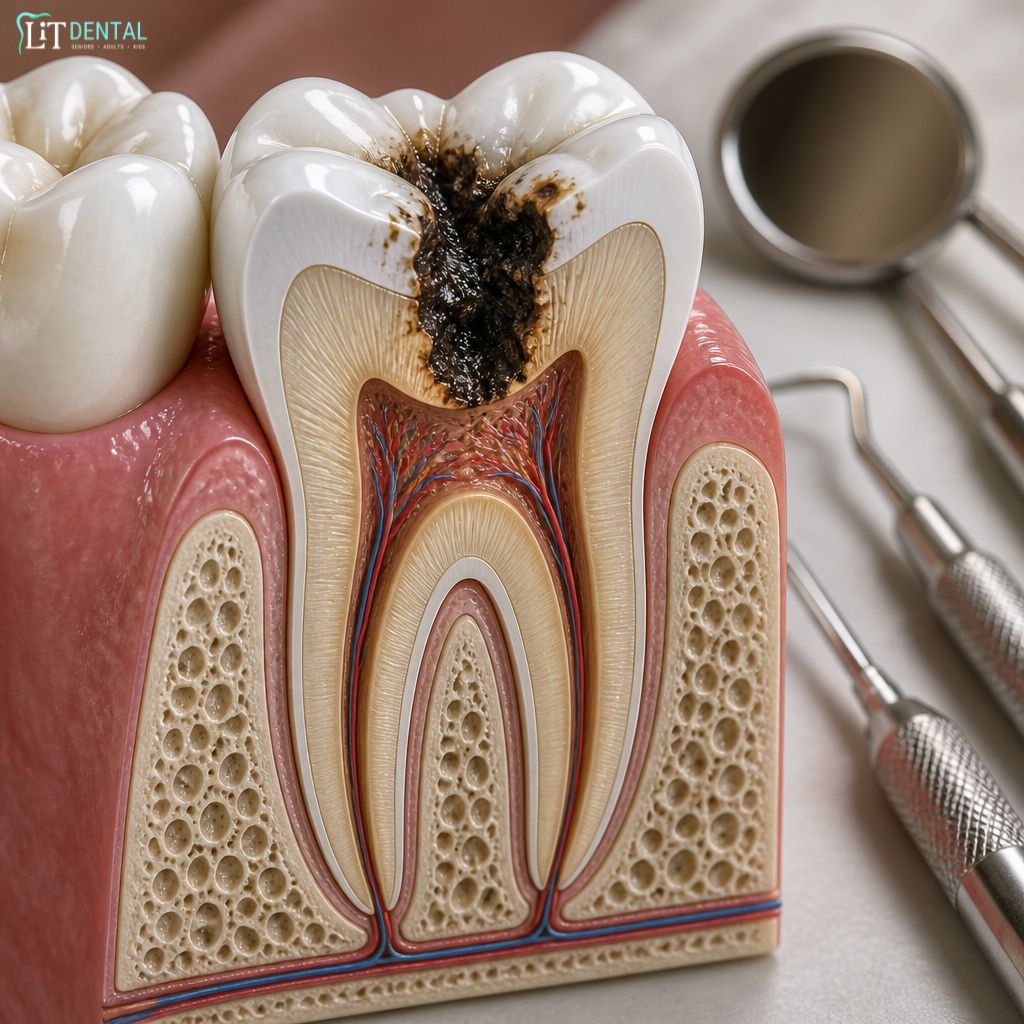

A cavity appears as a little dark spot, hole or discolored area on the surface of a tooth and spotting it early is the key to a simple filling instead of a much more complex procedure. Sometimes tooth decay doesn’t produce any immediate pain, which is why it is important to be able to recognize the signs and symptoms. This blog will take you through the different stages of cavities, the symptoms you experience when you develop a cavity, what causes them, and how your dentist can diagnose them for you so you can do something about it before it gets worse.
What is the appearance of a cavity in its initial and late stages?
The cavity begins small and grows in size as it advances, and looks drastically different when it is early versus late. What does a small cavity look like? And how does a small hole start out? It’s usually that chalky white, or kind of light brown area on the enamel, and sometimes it feels like it’s just a stain you can miss. But as decay keeps going, that spot gets more intense and darker, and then the enamel layer basically starts giving up, until you can see a pit, or a real little hole on the surface.
Visual hints of tooth decay, don’t just ignore them
- Early cavity symptoms can show up as white, chalky, or light brown patches sitting right on the enamel. People often treat those as harmless smudges, yet they’re really the beginning stages, where minerals are slipping away and the enamel is breaking down.
- What does a cavity look like on a molar? Cavities are most likely to form in the deep grooves and little pits of back teeth. That’s where food and bacteria tend to get tucked in and stay there. With back teeth, dark brown or almost black spots are more likely to point to a cavity.
- The result of advanced cavities is that a visible hole, dark pits or crumbling tooth material become increasingly evident, and by this point, the decay has usually reached deeper layers of the tooth, necessitating more complicated professional treatment.
What are the Signs of a Cavity?
One of the most dangerous aspects of tooth decay is that sometimes the first signs and symptoms are not painful. Most think that if there is no pain then there’s no problem, but cavities can go a long way before it causes pain. Acknowledging the non-pain signs, allows you to identify them earlier.
The signs of tooth sensitivity, tooth pain, and other warning signs.
One of the first signs of cavities is sensitivity to sweet foods or beverages, which is definitely an indicator that the enamel has been eroded to the point where the sweet taste can penetrate to the inner parts of the tooth.
If the biting surface makes contact with hot or cold temperatures or there is sharp or lingering pain, the decay has gone past the enamel and into the dentin area below; this should be seen by a dentist right away. If you notice any of these signs of cavities, you should see a dentist right away.
What Causes Cavities to Develop?
The process of causing cavities is all about bacteria, food and time, and once you grasp that, you realize how much more risk certain habits are than others. Everyone has bacteria in their mouth that eat the sugar and create acid as a waste product. It is that acid which slowly dissolves the enamel over time.
Plaque, Bacteria, Diet, and Other Risk Factors
- The plaque, or the sticky film of bacteria that coats teeth, releases acid whenever sugar or carbohydrates are present, and if it’s not removed on a daily basis by brushing and flossing, it slowly dissolves the enamel of teeth.
- Sugars and acids kinda give bacteria more to work with, across the day too, so there’s more time for acids to attack the enamel and that also helps the whole enamel breakdown start faster, almost like it snowballs.
- Some people can end up with a higher cavity chance even if their dental hygiene seems good. And it’s not just because of brushing… it can be because they have deep molar grooves, or because they don’t really see the dentist regularly, like ever or often enough.
How Do Dentists Treat Cavities?
A cavity can be diagnosed by a dentist using a mix of looking closely, gentle tactile probing and dental X-rays, and the best way to avoid a root canal issue from an unsightly cavity on a molar is to catch it early, through a professional examination.
Dental Exams, X-Rays and Early Detection Methods
A dentist inspects each surface of the tooth, magnifies the area, inspects for soft spots which indicate loss of minerals, and makes x-rays to evaluate for decay between the teeth or under current fillings. Early changes that can’t be seen in a cavity are often seen on x-rays well before they result in tooth pain or visible cavity.
LiT Dental provides comprehensive clinical examinations and individualized treatment planning to ensure accurate cavity diagnosis and treatment, including tooth-colored fillings to restore the tooth without affecting aesthetics. If you are having some early signs and symptoms of cavities or if you have seen a dark spot on a molar, LiT Dental is here to diagnose the situation accurately and provide professional dental care for your smile before the issue gets out of hand.

Conclusion
Cavities are not uncommon, yet also very preventable and treatable if they’re identified early in the development. By knowing what a small cavity looks like, early signs of cavity, and the causes of decay, you have an awareness that will enable you to make the right decision before the situation gets more complicated or expensive. At LiT Dental, we can help you maintain a healthy, comfortable, and cavity-free smile for a lifetime of benefits.
