
As one of the most prevalent health issues in the world, many people don’t have a complete grasp of how tooth decay happens, or what are the symptoms of tooth decay to look for and watch out for. Without tooth decay treatment, it can get worse from a minor problem to a costly and painful problem. Tooth decay happens when the outer layer of a tooth gets worn down little by little. At the start, it may be easy to miss. That is why early signs matter. This blog post explains what tooth decay is, what to look for, why it develops, and how a dentist can tell. If you deal with it early, the damage may not need to get much worse.
What is Tooth decay and how does it begin?
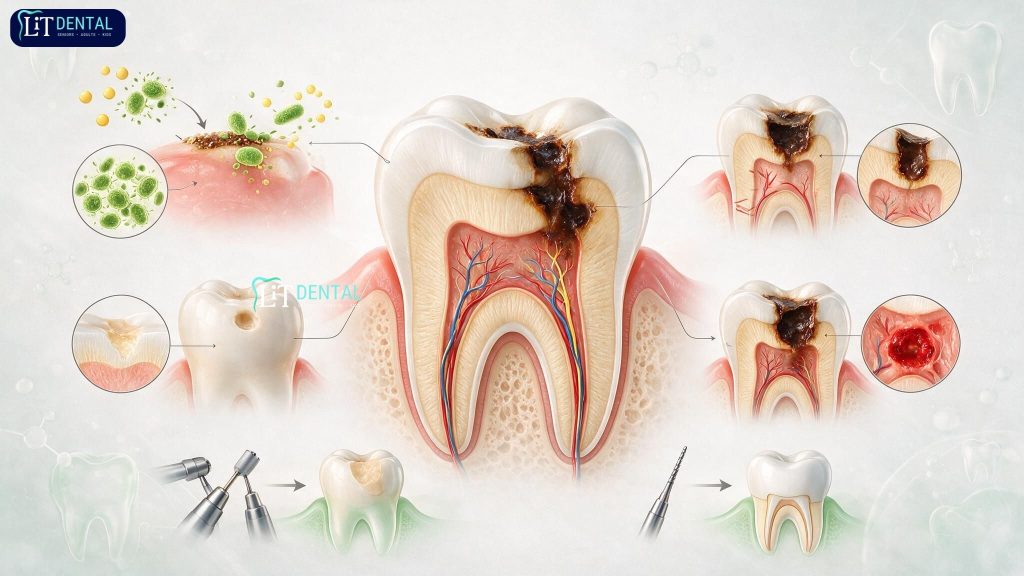
Tooth decay starts when germs in the mouth make acids. These acids slowly wear the enamel, the tough cover on the tooth. In the beginning, you may not notice changes. After some time, small cavities can show up. Cavities are little pits or marks where the tooth has been affected.
What often leads to it
- Germs gather and stick to leftover food. This leads to plaque on the teeth.
- Then the germs break down sugars into acids. Those acids go after the enamel.
- After that, the acid can keep attacking again and again. Each round makes the enamel thinner.
- With time, the thin area can grow into a cavity.
- If you wait too long, the decay can get into the inner part of the tooth. That can cause pain later.
What are the signs you should not ignore?
Some people assume tooth decay must hurt right away. That is not always true. You can still spot clues and get help sooner. A prompt check may also mean less work later.
Signs that show up first
- A few people get tooth pain soon- if warm drinks, cold treats, or sweet foods make a tooth feel sharp, it could be an early sign of tooth breakdown.
- Check the tooth surface closely- see if you spot a small dark mark or a very tiny hole. These can be signs that a cavity is forming.
- Staining of teeth with white, brown or black color indicates that enamel is deteriorating.
- Tooth pain – spontaneous or persistent pain may indicate that the decay has spread to deeper tooth layers.
- Bad breath that hangs around can show up even if you brush and you do not have cavities. One reason could be germs that build up in your mouth.
Why do cavities start?
Cavity trouble usually does not come from just one thing. It tends to happen when several risks show up at once. If you know the common triggers, you may be able to lower your chances.
- Plaque and bacteria
A sticky layer forms on teeth. If you skip brushing, or if you do not do it well enough, that layer keeps growing.
- Foods with sugar or starch
These foods can feed bacteria. The germs then make acids. Over time, acids break down tooth enamel.
- Not brushing or not flossing enough
When plaque is left behind, it can build up. It may even turn tougher and harder to remove.
- Dry mouth
Saliva normally helps clear away food bits and helps buffer acids. If your mouth is too dry, decay risk goes up.
- A bedtime bottle with juice or milk
For toddlers, this can increase the risk of tooth decay.
How do dentists check for tooth decay?
Dentists use exams and special tools to see decay. They can often spot it earlier than most people notice at home. Early diagnosis results in simpler treatment.
Visual exam of tooth surface: dentists use dental instruments to check for soft spots and visually examine tooth surface for visible signs of decay. Dental Examination, X-Rays and Early Detection: Dentists examine the surface of the teeth visually and use dental instruments to check for soft spots. Physical (X-ray) exams can detect decay between teeth or under the gumline that a traditional exam does not, giving the opportunity to treat decay in its early stages.
Tooth Decay Treatment Options at LiT Dental
If tooth decay is detected early, the tooth will not cause any further damage, and long-term oral health will be safeguarded. Whether you are suffering from serious cavities, or not, LiT Dental in McKinney, TX can provide the care you need.
- Small cavities can be treated with fillings. The decay gets taken out, and the tooth is sealed back up with a strong material that matches the way your tooth looks. This helps restore a natural look to your smile.
- If old cavities or stains have changed your smile, whitening or veneers might help. With these, teeth can look cleaner and smoother. We offer different cosmetic options. Some options also support how the tooth works. Others are mainly for looks. You can choose what fits you.
- To help stop toddler tooth decay and catch problems early. Cut down on sugary drinks. Brush often and make it a routine. Our team offers support and advice to parents of young children who are visiting the dentist.
All our dental professionals are licensed and perform comprehensive examinations and advanced diagnostics to detect decay at the earliest possible stage, before it can cause significant damage and before treatment becomes more expensive. All findings are explained clearly so that you will be able to fully understand your treatment options and make decisions about your care.

Conclusion
While it is never enjoyable to experience tooth decay, knowing the causes and symptoms of tooth decay can help you catch the condition in its early stages. Of plaque to cavities, knowing the signs is important at any age, including to help prevent cavities in children. At LiT Dental in McKinney, TX, we offer complete exams, a precise diagnosis and a comprehensive array of restorative and cosmetic dentistry solutions to help keep your smile intact. Call LiT Dental today to checkup and discuss any tooth decay concerns before they grow into larger issues.
