
Taking care of your smile should be as much of a daily routine as taking care of the rest of your body, and luckily, the process doesn’t need to be complicated. At home, regular dental care and making smart food choices, along with supporting dental care from a professional, will help keep teeth healthy for a lifetime. This blog is going to walk you through the key habits, routines, and everyday choices that work like the foundation for solid preventive dental care, in a way that feels simple and natural, not overly technical or anything.
What are the most crucial daily things that actually help keep teeth in good shape?
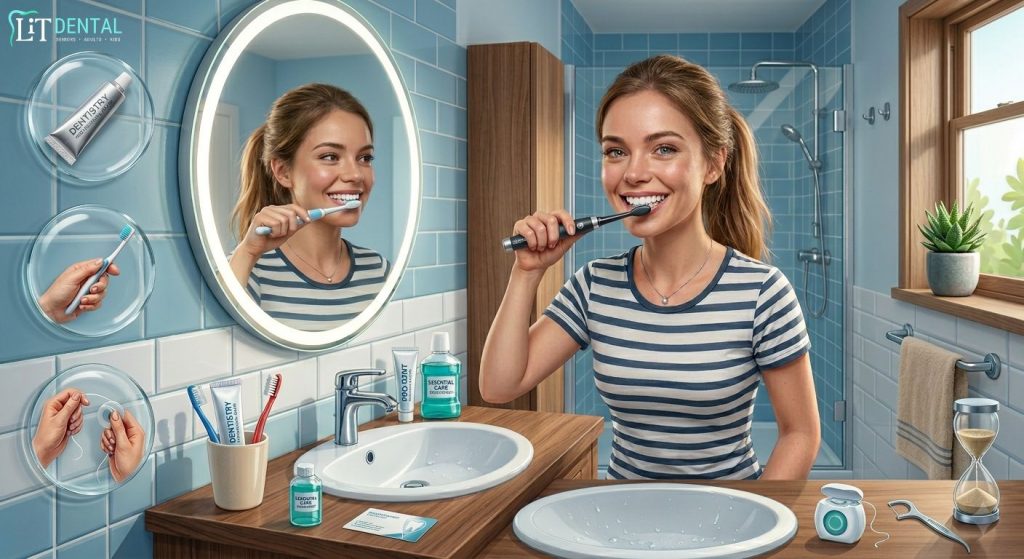
Brushing twice a day, flossing once per day, and using a fluoride mouthwash daily, they’re usually the biggest daily routine, hands down. Together these three habits do a solid job of lifting away plaque, safeguarding enamel and supporting healthy gum tissue too. Your teeth care routine at home plan doesn’t have to be expensive; it just needs to be consistent. Preventive dental care is rooted in doing the basics well, every day – and the best possible way to prevent expensive dental issues in the future.
Brushing, flossing and consistent oral care.
- Brush twice a day using a fluoride toothpaste, and brush in the morning and at night to remove plaque, strengthen the enamel and decrease the number of bacteria in the mouth before they can cause gum damage or decay.
- Floss once a day, every day — Flossing is the only way to get between teeth, an area the toothbrush cannot reach. Regularly missing it will allow plaque to turn into tartar and can only be removed by a professional cleaning.
- Rinse with an antimicrobial or fluoride mouthwash daily – A daily rinse is an additional layer of protection that will kill bacteria, freshen breath and strengthen the enamel, especially beneficial for anyone who is cavity prone or sensitive to gums.
How often do you brush and floss for best dental care?
Brush your teeth at least twice daily, first in the morning and again before you go to sleep and floss your teeth at least once daily, preferably before you brush. This schedule is the clinical recommendation endorsed by all the dental professionals. Preventive dentistry always stresses the importance of how well you clean your teeth, not how much. Two full minutes of brushing and taking the time to properly work the floss between each tooth will make a big impact in the long run.
Recommended Oral Hygiene Routine
Brush gently twice a day for 2 minutes with soft bristle toothbrush and fluoride toothpaste, with the bristles aimed at the gum line. Floss once a day, working in a c shape between each tooth. This practice is the foundation of a good preventive dental care program and will help to lower your risk of cavities, gum disease, and enamel erosion over time.
Which foods and beverages are good for your teeth and gums?
The food you eat has a direct impact on the health of your teeth and gums — some foods help your smile stay healthy while others work against it. Any effective preventive dentistry plan includes a tooth friendly diet, and some simple, informed diet choices at mealtimes can make a difference in your teeth care routine at home.
Tooth-Friendly Diet Choices
- Dairy stuff like plain yogurts, milk, and cheese have calcium plus phosphates. They help reverse mineral loss and they also neutralize acids in your mouth after eating, and they are pretty beneficial for tooth structure.
- Then there are the crunchy choices like carrots, celery, and cucumber. They make saliva, which is kind of your body’s first line of defense against bacteria. And the fiber gives that scrubbing action on the tooth surfaces while you chew, so it helps in a more natural way.
- Leafy greens such as spinach and kale contain good amounts of calcium and folic acid, which helps keep a healthy gum line and strong enamel, giving them a good place to start in the mind of the dental practitioner.
- Water, especially fluoridated water, is the best drink for your teeth. It removes food particles, neutralizes acids, moistens the mouth and provides fluoride to harden the tooth enamel – every sip of the day.
- Nuts and seeds are rich in minerals, such as phosphorus and magnesium, that help maintain healthy enamel, and are a much healthier snack than foods high in sugar, which breed cavity-causing bacteria.
What are the bad habits that can harm teeth?
Common daily habits over time can cause the gradual deterioration of teeth. Prevention dentistry is as much about working to eliminate bad behaviours as it is about establishing new ones. As well as knowing what to do, it’s important to know what not to do — after all, your teeth will thank you for both.
Sugar, acidic drinks and unhealthy habits.
- Sugars promote enamel-erosive acids, which bacteria make when they feast on sugar. Sports drinks, citrus juices and fizzy drinks are very acidic and can take away enamel with repeated use.
- Smoking causes teeth to become stained and promotes gum deterioration and increases the risk of disease.
- Those who habitually clench their jaws, bite their nails, or use their teeth to bite into items will eventually lose these as well, and it will be necessary to have them professionally restored, possibly with crowns, fillings or dental bonding.
- Patients with more serious structural and/or cosmetic issues can enjoy a more functional and esthetic outcome after receiving veneers.
If you don’t know if what you’re doing is harming your teeth, seek assistance. A licensed dental professional will be able to examine your mouth to determine the best prevention plan for your case and tell you about it.

Conclusion
The best way to invest in long term health is to take care of your teeth every day. Preventive dentistry is about a regular teeth care routine at home coupled with wise selection of foods and frequent check-ups by your dentist. LiT Dental is here to help if you’re searching for a dental team that offers the highest level of preventive care, along with a comprehensive selection of restorative treatments. Whether you’re in need of routine cleanings, crowns, veneers, dental bonding, fillings, or any other dental support, LiT Dental is here for you.
