
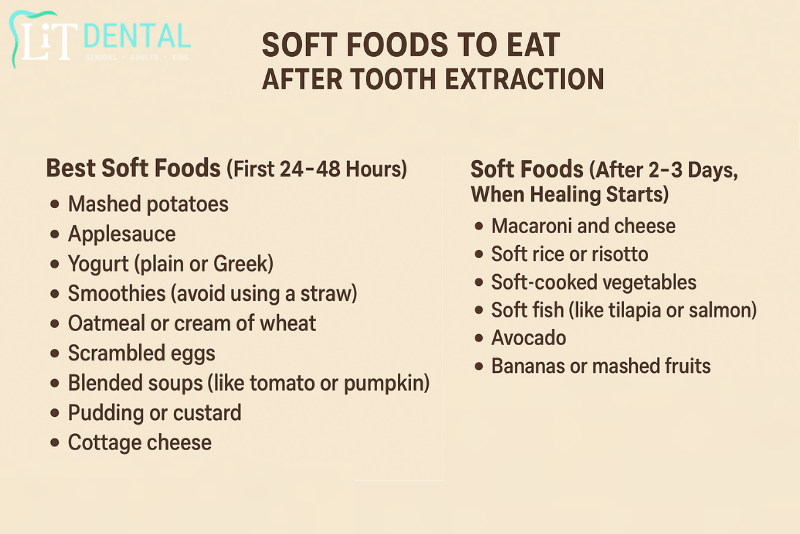
Having a tooth pulled can be a significant relief, especially if you were experiencing persistent pain or an infection. Tooth extraction is a very delicate procedure that requires proper aftercare. The most common question people ask is “What can I eat after a tooth extraction?” The simple answer is soft and nourished food that protects your healing site and helps in faster recovery without discomfort.
For the first few days, stick to soft and non-sticky foods and avoid hard and crunchy snacks. An adult needs 7-10 days of healing with proper care and a nutritious diet. Let’s explore the 50 best soft foods you can safely enjoy after a dental procedure.
50 soft foods to eat after a tooth extraction
Soft & Creamy Breakfasts
- Scrambled eggs
- Pancakes
- Yogurt
- Mashed Bananas
- Applesauce
- Chia Pudding
- Cream of wheat
- Cottage cheese
- Egg salad
- Mashed Avocado
- Fruit Smoothies
- Protein Shakes
- Soft bread
- Soft cheese
- Mild-sweet dessert
- Waffles
- Soft Cold cereal (soaked in milk)
Lunch & Dinner Options
- Well-cooked pasta
- Tofu
- Broth
- Gravy
- Shredded Chicken
- Macaroni & Cheese
- Soups
- Mashed carrots or peas
- Meatloaf
- Refried beans (mashed)
- lentil Soup
- Pumpkin Puree
- Tuna Salad
- Pureed spinach
- Baked Sweet Potato (Mashed)
- Quinoa
- Hummus
- Stew
- Ground beef
- Well-cooked rice
- Rice Pudding
- Fish
- Softened meatballs
Soft sides & Snacks
- Milkshakes
- Jell-O
- Ice-cream
- Yellow squash
- Fruit juices
- Soufflé
- Pureed fruits
- Muffins
- Custard
- Mousse
What food should you avoid after a tooth extraction?
While it’s important to understand what food you should eat after a tooth extraction, knowing what food to avoid is also equally important. Here’s what to avoid during the recovery period:
-
Hot and spicy food and beverages
These can increase swelling and bleeding at the wounded site.
-
Hard and crunchy food
Raw vegetables, chips, crackers, and any other food that requires hard chewing should be avoided, as they can become stuck in the extraction site and disrupt the healing process.
-
Sticky & Chewy foods
Candies, gums, and caramel-like sticky foods can stick to the healing site and dislodge the protective blood clot, causing pain and discomfort.
Other Things to avoid after tooth extraction
- For the first week, avoid smoking, as this can cause dry socket
- Do not drink alcohol or any hot drink after a tooth extraction
- Avoid eating spicy and hard food, as these can cause discomfort and pain.
- Avoid nuts, crackers, or seeds that can get stuck in the wounded area.
- If you see any clot in the wounded area, do not try to dislodge it, as this will slow down the healing process.
- Avoid drinking from a straw.
Proper aftercare is as important for a fast recovery as the dental procedure itself. What you eat and avoid can make a huge difference in healing. At LiT Dental, our experienced dentist in McKinney recommended soft food and a gentle care routine to ensure a smooth recovery without complications.
When to return to normal eating?
After the tooth extraction procedure, the patients often ask, “How long does the healing process take?” It varies from person to person, and how much you do the proper aftercare. Usually, it takes 1 to 2 weeks.
For the first three days, stick to soft food to reduce swelling and avoid anything hard to chew.
After a week, you can reintroduce the solid food you like, but not anything too sticky or hard.
After two weeks, your extraction site will be fully healed, and you can return to normal eating. This is the time to start planning for replacing your missing tooth, whether with a crown or a dental bridge.
Why choose LiT Dental for tooth extraction in McKinney, TX?
If you are experiencing severe pain and tooth extraction is the last resort, trust LiT Dental. We provide gentle dental care to ensure your comfort and optimal dental health.
McKinney patients trust us because:
- All dental procedures are performed by a licensed dentist as certified by the Texas State Board.
- We offer flexible payment options through Cherry Financing
- We accept all the insurance plans.
- Transparent and affordable pricing.

Final Thoughts
Whether it is your first tooth extraction or your wisdom tooth removal, you don’t have to sacrifice good nutrition. With these 50 soft food ideas, you can stay nourished, healthier, and protect your gums. If you are preparing for a tooth extraction, schedule your dental appointment at LiT Dental for guidance throughout the process.
