
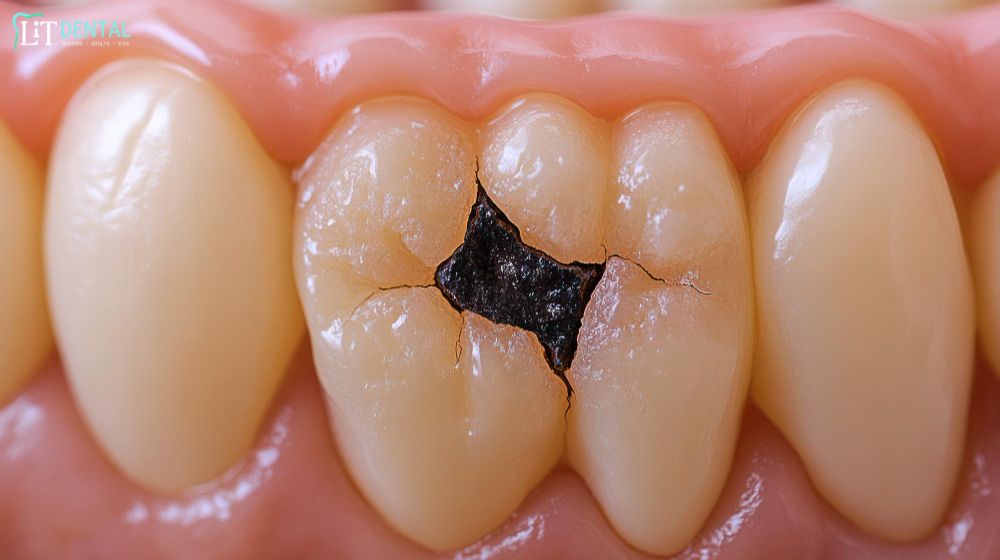
If treated early, a cracked tooth may be saved with proper care, and the difference between a simple and complicated crack tooth repair lies in the treatment. Most people are not aware that cracks can occur in teeth and that they can be as small as a hair crack on the surface or as deep as a crack into the tooth root. When something doesn’t feel right in your mouth, it’s helpful to know the causes of cracked teeth, the signs to look out for, and the options available for repair. This blog is simple and clear on all the topics you need to know.
What makes a tooth crack and why is early treatment important?
There are numerous causes of cracked teeth: hard chewing, grinding in sleep, sports injury, large old filling that has compromised the integrity of the tooth, or even quickly changing temperatures in the mouth. A small crack now may become worse with time if it is not treated now because the chewing forces can enlarge the crack over time, causing pain, infection, and ultimately tooth loss.
Untreated Cracks can be dangerous:
- If left untreated, an untreated crack can invite bacteria to penetrate the inner tooth and become infected and abscessed.
- A cracked tooth will get worse as the crack progresses towards the root.
- Cracked tooth cavity will allow for structural decay to occur more quickly and cause more difficulty and expense to repair.
What Symptoms May Indicate That You Have a Cracked Tooth?
The symptoms of a cracked tooth are not always as noticeable — and that’s what makes it easy to overlook or ignore. People with a cracked tooth may not notice their condition for months, and the symptoms may not be chronic. An understanding of the things to look for will enable you to act early rather than late.
Signs You Shouldn’t Ignore
- One of the most common cracked tooth symptoms is to watch out for is sharp pain when biting or releasing pressure on a specific tooth.
- A food that is hot, cold, or sweet that lingers for over a few seconds could mean that the crack has gone deeper to the inner layers.
- A fractured tooth that only sometimes causes pain, but not all the time, is a good indicator of a fracture that moves slightly when pressure is put on the tooth.
What does a dentist do when a tooth has a crack?
It is not always an easy diagnosis to make for a cracked tooth — many cracks cannot be seen with the naked eye, and it can be difficult to see a crack on a normal X-ray. Diagnosing the fracture, using the appropriate examination and techniques in order to pinpoint and evaluate fractures before they get worse.
Assessing severity and conducting exams.
- A dentist is able to detect cracks that can’t be seen with a routine check that would be missed during a visual exam using a bite test, dental explorer and transillumination light.
- X-rays can be used to evaluate how deep the crack is and to determine if there is any infection or bone involvement around the area of the root.
- When symptoms indicate that the tooth is cracked, imaging can help to assess the extent of the crack (from a small surface crack to a crack that extends to the root and surrounding tissue).
How to fix a cracked tooth?
The proper cracked tooth repair will depend on the depth of the crack, the area of the tooth involved and the presence or absence of infection or nerve involvement. Fortunately, most cracked teeth particularly those diagnosed early can be treated and the natural tooth preserved.
Bonding, Crowns, Root Canals, and More
For small surface cracks, dental bonding can be used to fill the crack with a tooth-colored resin. A crown is used in the case of a larger crack, which will preserve and support the remaining tooth structure. If a cavity in a cracked tooth has reached the nerves, a root canal may be required before a crown can be cemented to repair the tooth and eliminate the infection.
If crack tooth pain is not addressed early in the repair process, it could progress to the stage where the only solution is to extract the tooth. The best course of action at the first occurrence of cracked tooth symptoms is to get a professional evaluation. At LiT Dental, we provide comprehensive evaluations for cracked tooth and a variety of restorative options, such as dental bonding, crowns, fillings and veneers to help you retain your natural tooth for as long as possible.

Conclusion
A broken tooth doesn’t have to be the end of the world—it just needs to be taken care of. The professional evaluation will provide you with the best idea of what you’re dealing with and what you can do about it, regardless if your crack is small and surfaced, or deeper with symptoms. At LiT Dental, we offer you the most minimally invasive and effective treatment possible to maintain your natural tooth.
