
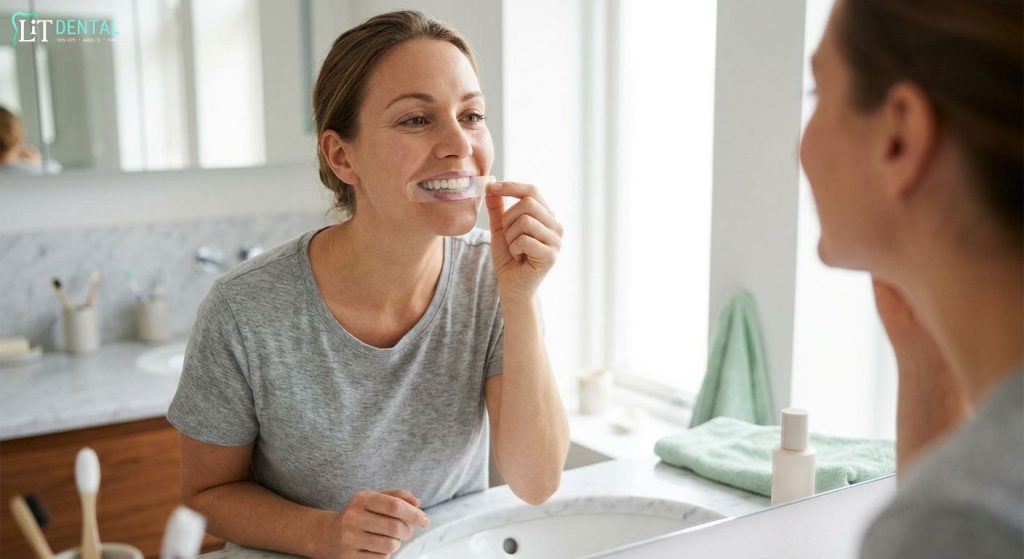
While teeth whitening strips can be used pretty safely in most people, as long as they are used correctly and not overdone, there are still some risks. They tend to work really well for lifting surface stains but they might also bring on sensitivity and possibly enamel problems if someone keeps pushing it too often or too long. After you have a real grip on the good, the bad, and the part where professional teeth whitening is more sensible, you should be able to pick what fits, and that choice can help your smile for quite a while, even years.
Are Teeth Whitening Strips Actually Safe for Your Teeth and Gums?
In general, teeth whitening strips are safe for most healthy adults when you follow the instructions as written. They use the same whitening components you’d find in professional care, just at a lower strength—typically hydrogen peroxide or carbamide peroxide. For most concerns about possible damage, the issue usually comes from improper use of the strips, such as wearing them for too long, too frequently, or using them on teeth that are already sensitive or damaged. But if your teeth and gums are healthy, this is usually not a big issue, provided it’s done only occasionally. It’s also a good idea to get a dental exam before starting any whitening routine.
Are Teeth Whitening Strips Effective in Removing Stains?
Whitening strips do work to an extent. They work best for surface stains such as coffee, tea, and some foods. The peroxide in the strips gets into the outer enamel layer of the tooth and breaks down stain molecules, giving teeth a lighter appearance. People usually notice a difference after 1–2 weeks of regular use. But for deeper intrinsic stains, strips are not as effective. Over-the-counter strips might not have much effect on stains from medication, trauma, or age. In those cases, professional options may be more suitable.
Will Whitening Strips Harm Tooth Enamel or Make Teeth Sensitive?
Yes, they can, especially with overuse. The peroxide in the strips opens the pores in enamel temporarily, allowing stain molecules to break apart, but it can also increase sensitivity by exposing the nerves to temperature changes. Enamel damage is less likely when used properly, but becomes a concern if strips are used more often than recommended. Before starting any at-home whitening routine, it’s important to understand possible side effects and prevention.
Common Side Effects and Prevention Tips
- Tooth sensitivity is the most common side effect and usually appears during or after use. It typically fades within a day or two. Sensitivity toothpaste can help reduce discomfort.
- Gum irritation can occur if strips touch the gum line. Trimming the strips for a better fit can help prevent this.
- Overuse can increase sensitivity and reduce effectiveness over time. Following instructions and taking breaks helps protect enamel.
- Uneven whitening may happen around crowns, veneers, or fillings since these materials do not respond the same way as natural teeth. A dental consultation is recommended before starting.
What Is the Difference Between Whitening Strips and Professional Whitening?
This is where the biggest difference lies. Whitening strips are convenient and affordable, but professional whitening is stronger, faster, and tailored to your dental condition.
Strength, Cost, and Results Differences
- Professional treatments use higher concentrations of whitening agents, leading to faster and more noticeable results—sometimes in a single visit.
- Whitening strips are cheaper initially, but may require repeated use and may not deliver the same level of results.
- Professional whitening is customized. Dentists evaluate enamel condition, gum health, and existing restorations like crowns, veneers, or fillings before recommending treatment.
If you want more than strips for a brighter smile, LiT Dental offers cosmetic and restorative treatments such as veneers, dental bonding, crowns, and fillings tailored to individual smile goals.

Conclusion
For mild staining, whitening strips can be a reasonable starting point, but they have clear limitations. Understanding sensitivity, side effects, and proper use helps you decide when professional whitening is the better option for safety and results.
If you’re unsure whether whitening strips are right for your teeth, a professional dental evaluation is the safest next step. LiT Dental provides guidance from licensed professionals who prioritize oral health and long-term results.
